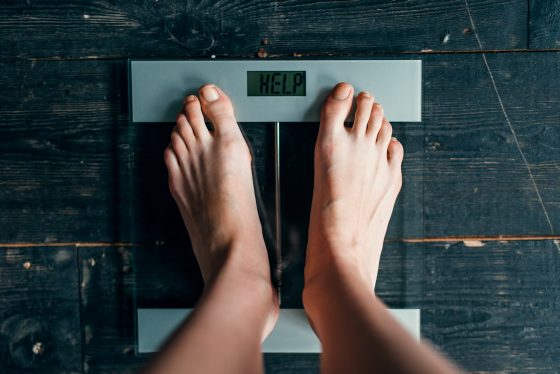


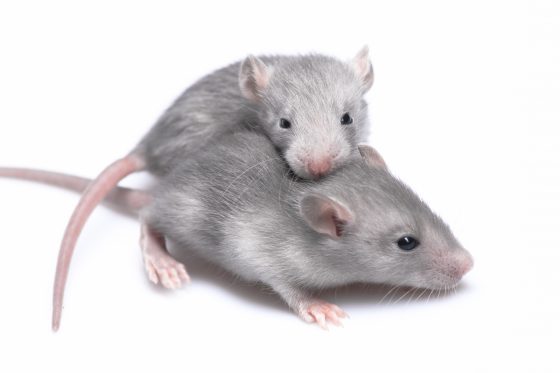
早在 2004 年,聖路易斯華盛頓大學的 Jeffrey I. Gordon 及其團隊以小鼠為材料的研究,即認為「腸道菌群是調解脂肪儲存的重要環境因素」,他們發現無菌小鼠(也就是經由剖腹產,然後養在無菌環境的小鼠)跟身體裡有腸道菌的一般小鼠相比,儘管攝取的食物量相同,但牠們的體脂肪仍然比較高。後續的研究則透過分析同母親的「胖小鼠」和「瘦小鼠」的腸道菌相,發現胖小鼠的腸道內細菌多樣性較低,且在主要兩個門(擬桿菌和硬毛蟲)差異較大。[1]
Fredrik B.et al. (2004) The gut microbiota as an environmental factor that regulates fat storage. Proc Natl Acad Sci U S A, 101(44), 15718–15723. doi: 10.1073/pnas.0407076101.
Ruth E. L., Fredrik B., Peter T. Catherine A. L., Robin D. K. & Jeffrey I. G. (2005) Obesity alters gut microbial ecology. PNAS, 102 (31), 11070-11075. https://doi.org/10.1073/pnas.0504978102
Patrice D. C. & Matthias V.H. (2020) Gut microbiota and obesity: causally linked? Expert Review of Gastroenterology & Hepatology, 14(6), 401-403. https://doi.org/10.1080/17474124.2020.1758064
Vanessa K. R. et al. (2013) Gut Microbiota from Twins Discordant for Obesity Modulate Metabolism in Mice. Science, 341(6150). DOI: 10.1126/science.1241214
Ammerman, N. C., Beier-Sexton, M., & Azad, A. F. (2008). Laboratory maintenance of Rickettsia rickettsii. Current protocols in microbiology, Chapter 3, Unit–3A.5.
Silverman, D. J. (1991). Some Contributions of Electron Microscopy to the Study of the Rickettsiae. European Journal of Epidemiology, 7(3), 200–206.
Gracie, D. J., Williams, C. J., Sood, R., Mumtaz, S., Bholah, M. H., Hamlin, P. J., et al. (2017). Negative effects on psychological health and quality of life of genuine irritable bowel syndrome–type symptoms in patients with inflammatory bowel disease. Clinical Gastroenterology and Hepatology, 15, 376–384. https://doi.org/ 10.1016/j.cgh.2016.05.012
van Langenberg, D. R., & Gibson, P. R. (2010). Systematic review: Fatigue in inflammatory bowel disease. Alimentary Pharmacology and Therapeutics, 32, 131–143.
D’Silva, A., Fox, D. E., Nasser, Y., Vallance, J. K., Quinn, R. R., Ronksley, P. E., & Raman, M. (2022). Prevalence and risk factors for fatigue in adults with inflammatory bowel disease: A systematic review with meta-analysis. Clinical gastroenterology and hepatology: the official clinical practice. journal of the American Gastroenterological Association, 20(5), 995–1009.e7. https://doi.org/10.1016/j.cgh.2021.06.034
Van Langenberg, D. R., Yelland, G. W., Robinson, S. R., and Gibson, P. R. (2017). Cognitive impairment in Crohn’s disease is associated with systemic inflammation, symptom burden and sleep disturbance. United European Gastroenterology Journal, 5, 579–587. https://doi.org/10.1177/2050640616663397
Ng, J. Y., Chauhan, U., Armstrong, D., Marshall, J., Tse, F., Moayyedi, P., et al. (2018). A comparison of the prevalence of anxiety and depression between uncomplicated and complex Ibd patient groups. Gastroenterology Nursing, 41, 427–435. https://doi.org/10.1097/ SGA.0000000000000338
Tremlett, H., Bauer, K. C., Appel-Cresswell, S., Finlay, B. B., & Waubant, E. (2017). The gut microbiome in human neurological disease: a review. Annals of Neurology, 81, 369–382. https://doi.org/10.1002/ana.24901
Vogt, N. M., Kerby, R. L., Dill-Mcfarland, K. A., Harding, S. J., Merluzzi, A. P., Johnson, S. C., et al. (2017). Gut microbiome alterations in Alzheimer’s disease. Scientific Reports, 7, 1–11. https://doi.org/10.1038/s41598-017-13601-y
Haran, J. P., Bhattarai, S. K., Foley, S. E., Dutta, P., Ward, D. V., Bucci, V., et al. (2019). Alzheimer’s disease microbiome is associated with dysregulation of the anti- inflammatory P-glycoprotein pathway. mBio, 10, e00632–e00619. https://doi.org/10.1128/ mBio.00632-19
Romano, S., Savva, G. M., Bedarf, J. R., Charles, I. G., Hildebrand, F., & Narbad, A. (2021). Meta-analysis of the Parkinson’s disease gut microbiome suggests alterations linked to intestinal inflammation. npj Parkinson’s Disease, 7, 1–13. https://doi.org/10.1038/s41531-021-00156-z
Ohgami, N., Ida-Eto, M., Shimotake, T., Sakashita, N., Sone, M., Nakashima, T., et al. (2010). C-ret–mediated hearing loss in mice with Hirschsprung disease. Proceedings of the National Academy of Sciences, 107, 13051–13056. https://doi.org/10.1073/pnas.1004520107
Denton, A. J., Godur, D. A., Mittal, J., Bencie, N. B., Mittal, R., & Eshraghi, A. A. (2022). Recent advancements in understanding the gut microbiome and the inner ear Axis. Otolaryngologic Clinics of North America, 55, 1125–1137. https://doi.org/10.1016/j.otc.2022.07.002
Graham et al., 2023 Graham, A. S., Ben-Azu, B., Tremblay, M. È., Torre, P., 3rd, Senekal, M., Laughton, B., van der Kouwe, A., Jankiewicz, M., Kaba, M., & Holmes, M. J. (2023). A review of the auditory-gut-brain axis. Frontiers in Neuroscience, 17, 1183694. https://doi.org/10.3389/fnins.2023.1183694
Kociszewska, D., & Vlajkovic, S. M. (2022). The association of inflammatory gut diseases with neuroinflammatory and auditory disorders. Frontiers in Bioscience-Elite, 14:8. https://doi.org/10.31083/j.fbe1402008
Megantara, I., Wikargana, G. L., Dewi, Y. A., Permana, A. D., & Sylviana, N. (2022). The role of gut Dysbiosis in the pathophysiology of tinnitus: a literature review. International Tinnitus Journal, 26, 27–41. https://doi.org/10.5935/0946-5448.20220005
Breit, S., Kupferberg, A., Rogler, G., and Hasler, G. (2018). Vagus nerve as modulator of the brain–gut axis in psychiatric and inflammatory disorders. Frontiers in Psychiatry, 9:44. https://doi.org/10.3389/fpsyt.2018.00044
Mion, F., Pellissier, S., Garros, A., Damon, H., Roman, S., and Bonaz, B. (2020). Transcutaneous auricular vagus nerve stimulation for the treatment of irritable bowel syndrome: a pilot, open-label study. Bioelectronics in Medicine, 3, 5–12. https://doi.org/10.2217/ bem-2020-0004
Lehtimäki, J., Hyvärinen, P., Ylikoski, M., Bergholm, M., Mäkelä, J. P., Aarnisalo, A., et al. (2013). Transcutaneous vagus nerve stimulation in tinnitus: a pilot study. Acta Oto-Laryngologica, 133, 378–382. https://doi.org/10.3109/00016489.2012.750736
Ylikoski, J., Markkanen, M., Pirvola, U., Lehtimäki, J. A., Ylikoski, M., Jing, Z., et al. (2020). Stress and tinnitus; transcutaneous auricular vagal nerve stimulation attenuates tinnitus-triggered stress reaction. Frontiers in Psychology, 11:2442. https://doi.org/10.3389/ fpsyg.2020.570196
Fousekis, F. S., Saridi, M., Albani, E., Daniel, F., Katsanos, K. H., Kastanioudakis, I. G., et al. (2018). Ear involvement in inflammatory bowel disease: a review of the literature. Journal of Clinical Medicine Research, 10(8), 609–614. https://doi.org/10.14740/jocmr3465w
Karmody, C. S., Valdez, T. A., Desai, U., & Blevins, N. H. (2009). Sensorineural hearing loss in patients with inflammatory bowel disease. American Journal of Otolaryngology, 30, 166–170.
Akbayir, N., Çaliş, A. B., Alkim, C., Sökmen, H. M. M., Erdem, L., Özbal, A., et al. (2005). Sensorineural hearing loss in patients with inflammatory bowel disease: A subclinical extraintestinal manifestation. Digestive Diseases and Sciences, 50, 1938–1945. https://doi.org/10.1007/ s10620-005-2964-3
Wang, W., Zhang, L. S., Zinsmaier, A. K., Patterson, G., Leptich, E. J., Shoemaker, S. L., et al. (2019). Neuroinflammation mediates noise-induced synaptic imbalance and tinnitus in rodent models. PLoS Biology, 17:e3000307. https://doi.org/10.1371/ journal.pbio.3000307
Niu, J., Xu, H., Zeng, G. et al. (2023). Music-based interventions in the feeding environment on the gut microbiota of mice. Scientific Reports, 13, 6313. https://doi.org/10.1038/s41598-023-33522-3