-200x200.jpg)
面對恐懼與憎惡,固守執念僅會增添痛苦,不如從別的角度來看待事物。
丹麥裔美國哲學家貝麗特.布加德(Berit Brogaard)[1]在《憤恨:了解我們最危險的情緒》(Hatred:Understanding Our Most Dangerous Emotion)中,提到這些負面感受,是我們面對可能的傷害時,會有的直覺反應,但未必與真實的危險有關。
比方說,消毒後完全無菌的蟑螂,就算裝在膠囊裡,您還是不敢吃。有時憎惡是源自「受到束縛的靈魂」,無奈沒法掙脫不斷老化的軀體,從而對任何與腐化、死亡關聯的事物,都感到噁心。總之,會產生那些負面的情緒,千錯萬錯都是自己心理作祟,不得怪罪外在的世界。
哲學家布加德說了這麼多,難道只是在為她筆下,集「爛蛋、酸乳、腐魚、水溝」臭味之大成的瑞典臭魚開脫?
詳解鹽醃鯡魚罐頭的前世今生
「瑞典鹽醃鯡魚罐頭」(surströmming),是一種發酵到臭「酸」(sur)的「波羅的海鯡魚」(strømming;學名:Clupea harengus var. membras)。[2]
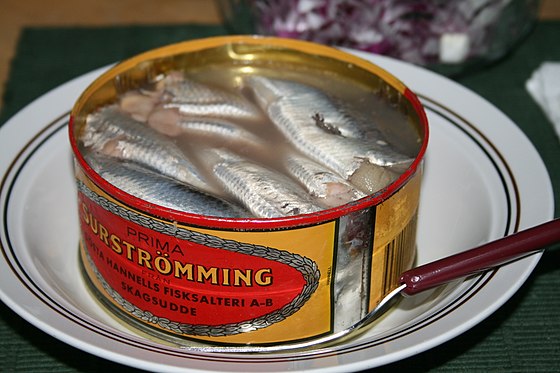
在每年 5 月到 7 月的產卵季前,漁夫會獵捕這些體脂肪尚低的鯡魚,將魚浸在飽和的鹽水裡 1天至 2 天,而且最初 4 個小時還得不停攪動。接著,會移除頭部和大部份內臟,但保留性腺和幽門垂(pyloric ceca),然後將魚放進桶裝的 17% 稀釋鹽水裡,裝桶後的頭三天,不時滾動桶子。之後,在 15 到 18 度左右的溫度下,儲藏 3 週到 4 週,待發酵完成,鯡魚就會被分裝進罐頭中。
這種繁複的做法,原本可能是為了保存大量漁獲而設計。儘管發酵後的產品以惡臭出名,16 世紀時卻一度因為缺乏食鹽而流行,到了 17 世紀更成為瑞典某些地區的軍糧。[2](是說他們怎麼都不擔心臭到鳥散魚潰,全軍覆沒?)
日本 NHK 曾以科學方法,為世界各國的惡臭食物排名,冠軍「瑞典鹽醃鯡魚罐頭」的威力,是薰遍臺灣大街小巷的臭豆腐所望塵莫及。[3]
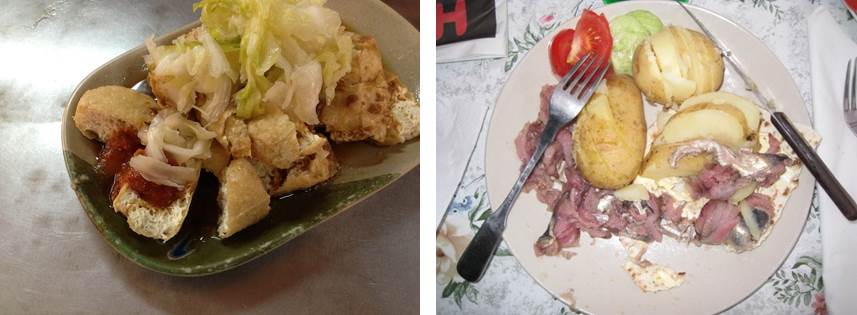
如同欣賞奧運體操,有強度也要不失美感。歷年來不少科學家費心挖掘它的內涵,從腐化的過程到臭味的層次都加以分析。
波羅的海鯡魚死後,在邁向瑞典國粹罐頭的偉大旅程上,最開始的幾個步驟是這樣的:[2]
- 在封閉無氧的環境下,肌肉分解為乳酸。
- 蛋白質與脂肪「自溶」(autolysis;又稱「自體分解」)。
- 微生物菌落開始建立。
鯡魚極富層次的臭味
其中,鯡魚肌肉組織中可見的自溶酵素,包括:鈣蛋白酶(calpains)、 組織蛋白酶(cathepsins)、 帶有胱天蛋白酶(caspase)的蛋白酶體(proteasomes)等。此外,細菌以及幽門垂裡的酵素,也在此間推波助瀾。[2]
接著,在每年七、八月,分裝好的鯡魚罐頭被交給大盤商後,發酵的過程仍會持續半年之久,直到裡面的氣體把罐頭給撐到變形。[2]科學家在三個廠牌的罐頭裡,找到數種細菌,主要包含:Alkalibacterium、Carnobacterium、Tetragenococcus、Clostridiisalibacter、Porphyromonadaceae和Halanaerobium等。[4][註1]由於罐頭內鹽份提高了醃漬液體中的滲透壓(osmotic pressure),使部份細菌無法將蛋白質分解成寡肽(oligopeptides)和胺基酸(amino acids),因此一般屍體腐敗過程中常見的吲哚(indole)、糞臭素(skatole)、腐胺(putrescine)、屍胺(cadaverine),都不會出現。[2]
瑞典鹽醃鯡魚罐頭裡,經由發酵產生的氣體,除了二氧化碳,還有層次多元的臭氣:
- 乙酸(acetic acid)[2]:食用醋的主要化學成份。
- 丙酸(propionic acid)[2]:具刺鼻酸味。[5]
- 丁酸(butyric acid):聞起來像變質的奶油。[2]
- 戊酸(valeric acid)[6]:有腳臭味。[7]
- 己酸(caproic acid)[6]:帶著腐爛包心菜的氣息。[8]
- 氨(ammonia)[6]:一股尿騷味。[5]
- 甲硫醇(methanethiol)[6]:造成人類口臭和糞便惡臭的化合物之一,也是吃完蘆筍後幾小時,改變尿液氣味的元兇。[9]
- 硫化氫(hydrogen sulfide)[6]:散發腐爛雞蛋般的臭味。[2]
- 三甲胺(trimethylamine)[4]:一種三級揮發胺(volatile amine)[10],聞起來像腐魚、爛蛋、垃圾或尿液。[11]
如何正確的打開鯡魚罐頭
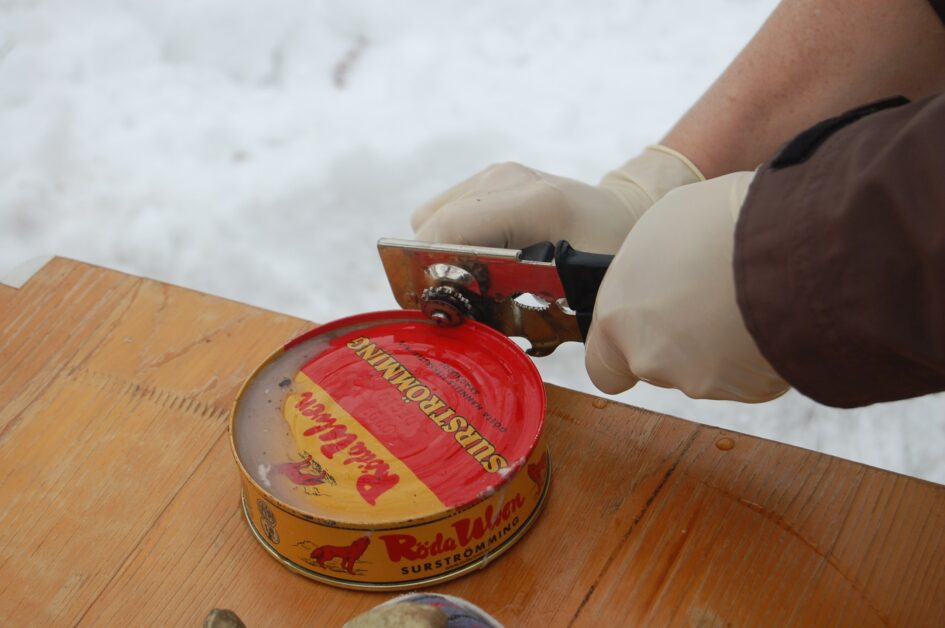
當上述發酵產生的氣體,已經在封閉環境內鼓脹至極限,您手中握著的就不再是個單純的罐頭,而是處理不慎便會忘情噴發的未爆彈。儘管瑞典人在 YouTube 上,優雅示範如何輕鬆開罐享用鹽醃鯡魚,外國人未必能輕易駕馭項絕技。[12]
根據《臭食物大全:發酵學教授的美食筆記》作者小泉武夫教授的親身經驗,他在飯店房間裡被爛魚炸得一身腥,全身衣物脫到剩內褲,還是洗不掉手上的味道。
為避免重蹈小泉教授的覆轍,請有心嘗試的讀者參考下列安全要點:[6]
- 事先冷凍,以降低罐內氣壓,減少噴發風險。
- 在戶外開罐,避免室內環境遺臭萬年。
- 穿著不要的衣物或雨衣,倘若拆彈(開罐)失敗,至少心愛的潮服不受波及。
- 站在下風無人處執行,臭氣才不會殃及池魚。
其實鯡魚罐頭內含豐富營養
您或許會問這般煞費苦心,究竟是為了什麼?販賣瑞典鹽醃鯡魚的網站宣稱其產品除了鹹之外,還濃郁、酥脆、有酸勁,且帶草藥味。[13]小泉教授則認為,不值得為這種像是加了碳酸水的醃漬物,拼得魚死網破。[6]當然,美味與否單純主觀認定,但其食品安全和營養成份倒是可受公評。
值得欣慰的是,有礙人體健康的菌種,例如:李斯特菌(Listeria monocytogenes)、沙門桿菌(Salmonella)、金黃色葡萄球菌(Staphylococcus aureus)、仙人掌桿菌(Bacillus cereus)與產氣莢膜梭菌(Clostridium perfringens)等在鯡魚罐頭研究中都零檢出。[2], [4]此外,瑞典鹽醃鯡魚含有 11.8% 蛋白質、8.8% 鹽份、3.8% 脂肪,以及 omega-3 脂肪酸、維他命 D 和以鈣質為主的礦物質等豐富的營養。[2], [14]
所以,只要能夠克服人類面對魚餒肉敗時,本能的心理障礙,瑞典鹽醃鯡魚罐頭其實可以為您帶來安全、滋養,且充滿驚奇的異國饗宴。
註解
- 許多指稱「鹽厭氧菌屬」(Halanaerobium)為瑞典鹽醃鯡魚罐頭發酵主力的文獻,似乎都是參考2000年《國際食品微生物學》(International Journal of Food Microbiology)的論文。[15]然而本文採用的2020年《食品微生物學》(Food Microbiology)最新研究,提到許多在這種罐頭中的細菌「第一次被發現」。(”The data obtained allowed pro-technological bacteria, which are well-adapted to saline environments, to be discovered for the first time.”)[4]
參考資料
- Hatred: Understanding Our Most Dangerous Emotion by Berit Brogaard (Oxford University Press, 2020; p.29-30)
- Fermented and ripened fish products in the northern European countries (Journal of Ethnic Foods, 2015)
- 臭い食べ物のランキング(社会実情データ図録,2022)
- Discovering microbiota and volatile compounds of surströmming, the traditional Swedish sour herring (Food Microbiology, 2020)
- Characteristics of Deodorization for Malodorants in Aqueous Solution by Sonication (Journal of the Environmental Sciences, 2004)
- 來自瑞典的地獄罐頭!鹽醃鯡魚到底在臭什麼?(食力,2018)
- Chilled Foods: A Comprehensive Guide by Martyn Brown (Woodhead Publishing, 2008; p.121)
- Formation of volatile sulfur compounds and S-methyl-l-cysteine sulfoxide in Brassica oleracea vegetables (Food Chemistry, 2022)
- Sulfur Metabolism in Plants and Related Biotechnologies (Comprehensive Biotechnology (Second Edition) Volume 4, 2011, p.257-271)
- Aerial Exposure to the Bacterial Volatile Compound Trimethylamine Modifies Antibiotic Resistance of Physically Separated Bacteria by Raising Culture Medium pH (American Society for Microbiology, 2014)
- Trimethylaminuria (MedPlus, 2021)
- Swedes Show Them How It’s Done (YouTube, 2015)
- What Does Surströmming Smell Like? (The Swedish Surströmming Supplier)
- Health effects of nutrients and environmental pollutants in Baltic herring and salmon: a quantitative benefit-risk assessment (BMC Public Health, 2020)
- Strictly anaerobic halophiles isolated from canned Swedish fermented herrings (Surströmming) (International Journal of Food Microbiology, 2000)

 狐禪
狐禪-85x85.jpg) 胡中行
胡中行