孕婦媽媽們,妳們家的奶瓶,是那些廠牌呢?四款奶瓶被驗出有微量的環境賀爾蒙-雙酚A(Bisphenol A, BPA),可能會讓肚子裡還未出生的女嬰,長大後容易產生焦慮、過動還有憂鬱症喔 [1]!
讓我們來關注一下鱷魚的陰莖
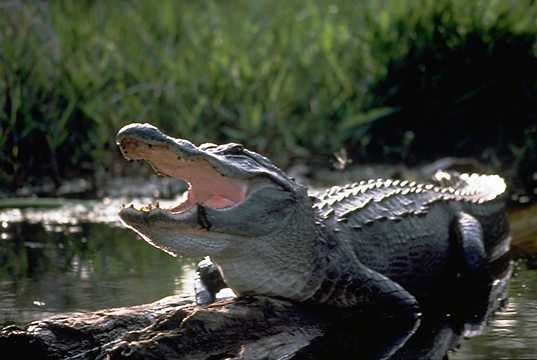
幾十年前,生活在美國奧克蘭附近的阿波普卡湖(Lake Apopka)的鱷魚,正被一群科學家性騷擾 [2]。以小路易斯 J. 吉萊特(Louis J. Guillette Jr)等學者為首,開始一隻一隻地抓住正值青少年的公鱷魚,仔細地打量牠們的陰莖,並且將他們變態認真的研究紀錄發表在比較內分泌學(General and Comparative Endocrinology)期刊上。
上面這個故事不是在講那群變態的科學家故事,也不是在說今年的搞笑諾貝爾獎(已經頒完了啦!),而是百年來人類自己製造出的小惡魔--環境荷爾蒙。
環境荷爾蒙對細胞而言,就像是錯誤的鑰匙卡在鎖頭上,從此再也打不開門
小路易斯 J. 吉萊特等人發表的研究中描述,阿波普卡湖的年青公鱷,陰莖長度比其他湖的公鱷短了約1/4,體內的雄性激素濃度更低了70%,而讓公鱷們只能擁有短陰莖的原因,作者們推測是體內存在過多的環境荷爾蒙,而這些偽裝成正常分子的化合物,佔住了細胞上的受體(receptor),猶如錯誤的鑰匙卡住了鎖孔,讓正常的荷爾蒙無法發揮作用,使得湖中的年輕公鱷,只能擁有短陰莖 [2]。
細胞需要荷爾蒙來調控生長,當化合物結構長得很像正常的荷爾蒙時,細胞可能就會誤認,此時化合物卡在細胞膜上的受器蛋白後,細胞無法執行任務 [3,4],因此就會影響到動物的生長。南京醫藥大學的王心如(Xin-Ru Wang)教授發現雙酚A會卡住細胞膜上的荷爾蒙受體蛋白,可能會阻礙正常訊息傳遞 [3]。而德克薩斯大學醫學中心的安L.沃茲尼亞克(Ann L. Wozniak)學者團隊,發現雙酚A會改變細胞內鈣離子的濃度,更解釋了雙酚A或其他環境荷爾蒙會影響細胞,並進而影響到動物的生長。
但以上都是理論,人類的世界呢?去年冬天英國衛報的一則新聞報導中提及,代表挪威、瑞典、芬蘭、冰島和丹麥的北歐理事會決定對化妝品等產品中的環境荷爾蒙採取行動,更提到醫學研究指出,北歐的男性因環境荷爾蒙的影響,生育能力已經減少了約30% [5]。
那雙酚A呢?來自哈佛大學的喬M.布勞恩(Joe M. Braun)以及各學校的學者,以雙酚A為例,想了解雙酚A對於胎兒和幼兒的情緒發展影響。研究中發現,不論是仍在母親中的女嬰,或是已經出生的小女孩,如果暴露在雙酚A 的環境下,女孩可能會變得更容易憂鬱、情緒焦躁不安 [1]!
那裡會有雙酚A?
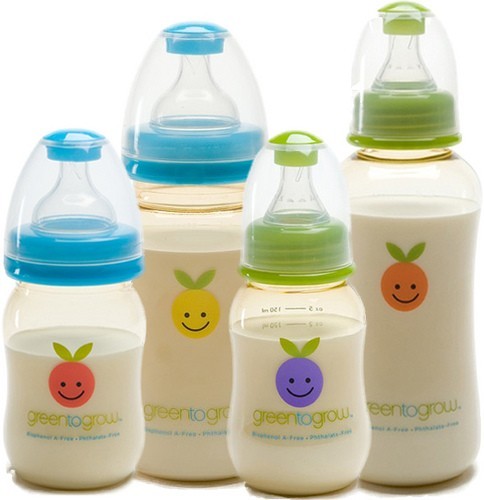
雙酚A是工業上製造塑膠、環氧樹脂等產品的原料之一,其中製備出的聚碳酸酯(polycarbonate, PC),由於和其他種類的塑膠製品相較,具有透明度高、耐熱性較好等優點,所以是製備成奶瓶的良好材質 [6]。但各位讀者已經了解到,雙酚A對於幼兒的發育可能會有影響,所以台灣已經明令奶瓶不得被驗出含有雙酚A(加拿大為全球首國禁止)[7]。
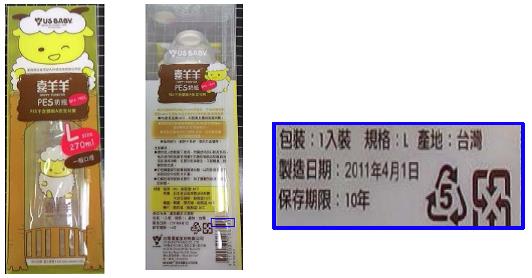
而食品藥物管理署在9月底發佈了一則消息,抽查了350件奶瓶、奶嘴,其中有4件商品驗出雙酚A,分別是喜洋洋1件、優生2件、培寶1件 [8]。
該怎麼避免奶瓶裡的雙酚A?
首要當然是不要購買上述4件商品,再者也許可以改用玻璃製的商品,如此就可以避免接觸到塑膠奶瓶所溶出的雙酚A了。
寫在文末
在這則新聞播出以後,有些媽媽朋友請筆者去詢問食藥署,「有那些商品是合格,可以讓消費者安心購買的呢?」,但目前我還沒有獲得答案,無法給媽媽朋友們解答,筆者覺得有點沮喪。我希望能夠得到答案。
另外筆者在看了食藥署的「不合格產品清單」,發現到一個讓我很困惑的點。可能會溶出雙酚A的塑膠是聚碳酸酯(PC)和聚氯乙烯(PVC),而它們的塑膠分類標誌分別是「7」和「3」,但食藥署公佈的喜洋洋奶瓶上標誌卻是「5」,這是什麼原因呢?不解 @_@

參考文獻
- Joe M. Braun, Amy E. Kalkbrenner, Antonia M. Calafat, Kimberly Yolton, Xiaoyun Ye, Kim N. Dietrich, and Bruce P. Lanphear, (2011) Impact of Early-Life Bisphenol A Exposure on Behavior and Executive Function in Children, Pediatrics, 128, 873-882
- Louis J. Guillette Jr., Daniel B. Pickford, D. Andrew Crain, Andrew A. Rooney, and H. Franklin Percival (1996) Reduction in Penis Size and Plasma Testosterone Concentations in Juvenile Alligators Living in a Contaminated Environment, General and Comparative Endocrinology, 101, 32-42
- Li-Chun Xu, Hong Sun, Jian-Feng Chen, Qian Bian, Jie Qian, Ling Song, Xin-Ru Wang (2005) Evaluation of androgen receptor transcriptional activities of bisphenol A, octylphenol and nonylphenol in vitro, Toxicology, 216, 197-203
- Ann L. Wozniak, Nataliya N. Bulayeva, and Cheryl S. Watson (2005) Xenoestrogens at Picomolar to Nanomolar Concentrations Trigger Membrane Estrogen Receptor-α–Mediated Ca2+ Fluxes and Prolactin Release in GH3/B6 Pituitary Tumor Cells, Environmental Health Perspectives, 113, 431-429
- Germaine M. Buck Louis, Kurunthachalam Kannan, Katherine J. Sapra, José Maisog and Rajeshwari Sundaram (2014) Urinary Concentrations of Benzophenone-Type Ultraviolet Radiation Filters and Couples’ Fecundity, American Journal of Epidemiology, DOI: 10.1093/aje/kwu285
- 雙酚A (Bisphenol A, BPA),食品藥物管理署官方網頁。 http://www.fda.gov.tw/TC/siteContent.aspx?sid=3822#.VhEvTN-qqko
- 環保署公告雙酚A為第四類毒性化學物質 規範其運作以減少國人環境荷爾蒙暴露風險,環保署官方網頁。
- 公布「市售塑膠類奶瓶及奶嘴稽查專案計畫」之稽查結果,食品藥物管理署官方網頁。