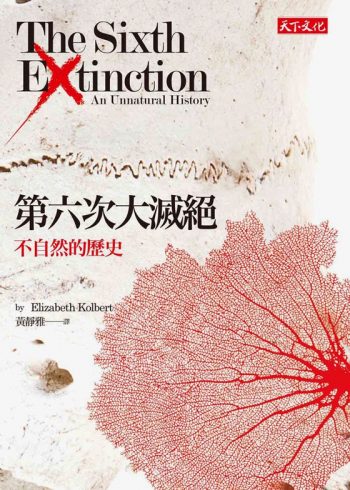
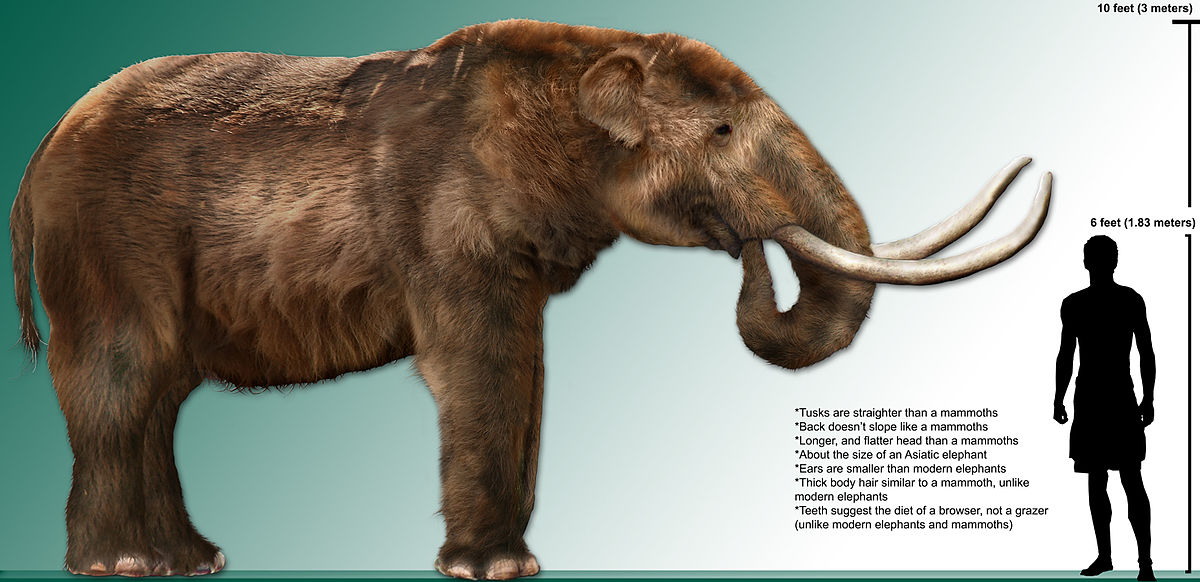
1812 年,居維葉將他的化石動物研究成果,出版一套共四卷彙編:《四足動物骨骼化石之研究》。在居維葉開始他的「研究」之前,本來只有零或一種已滅絕的脊椎動物(要看是誰在計算)。到後來變成有四十九種,絕大部分都是居維葉的功勞。隨著居維葉的滅絕名單愈來愈長,他的名氣也愈來愈大。未經他的審查,很少有博物學家敢公開宣布他們的發現。「居維葉難道不是本世紀最偉大的詩人?[5」巴爾札克(Honoré de Balzac)如此問道:「我們不朽的博物學家從一根白骨重建世界,如同卡德摩斯(Cadmus)從一顆牙齒重建城市。」
Charles Coleman Sellers, Mr. Peale’s Museum: Charles Willson Peale and the First Popular Museum of Natural Science and Art (New York: Norton, 1980), 142.
Charles Willson Peale, The Selected Papers of Charles Willson Peale and His Family, edited by Lillian B. Miller, Sidney Hart, and David C. Ward, vol. 2, pt. 1 (New Haven, Conn.: Yale University Press, 1988), 408.
出處同上,vol. 2, pt. 2, 1189.
出處同上, vol. 2, pt. 2, 1201.
Toby A. Appel, The Cuvier-Geoffroy Debate: French Biology in the Decddes before Darwin (New York: Oxford University Press, 1987), 190.
以市面上備受矚目的 Panasonic A La Uno 全自動洗淨馬桶為例,就是將材料科學、結構工程與流體力學發揮到極致的典型代表:
1. 材料層:有機玻璃系新素材
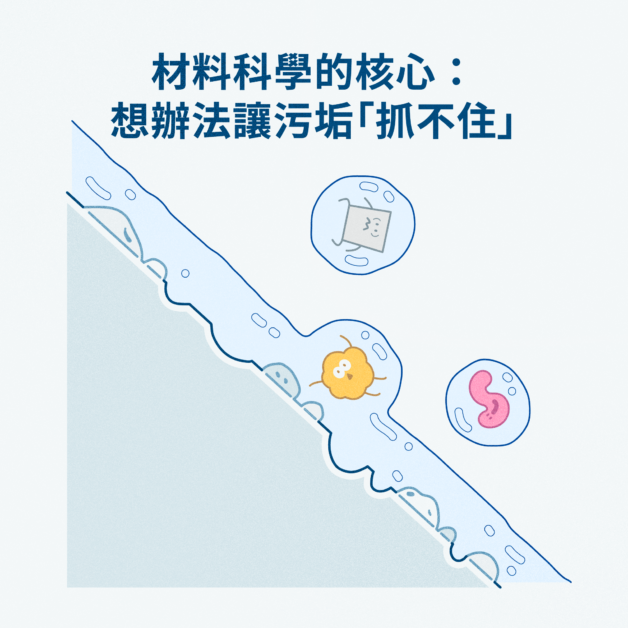
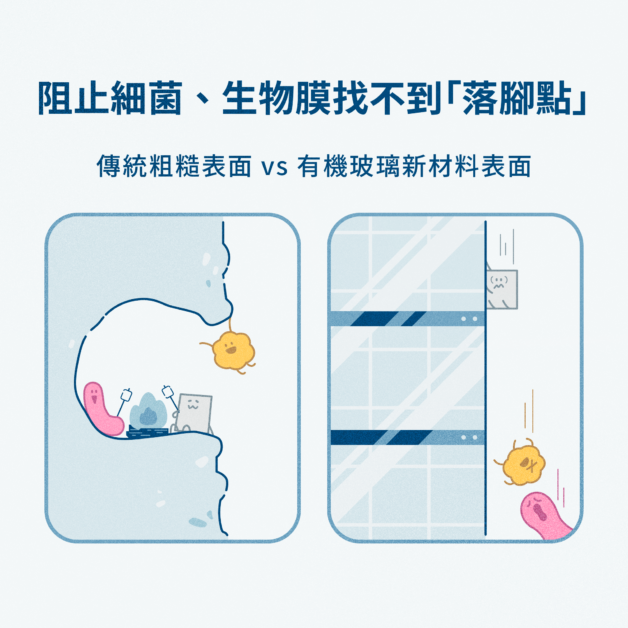
A La Uno 全自動洗淨馬桶採新開發的「有機玻璃系新素材」(以壓克力高分子為基礎研發的衛浴專用材料,這類高分子成形技術亦被廣泛運用於大型水族館高壓觀景窗與飛機機艙罩)。這種材料表面具備極佳的疏水性與耐水垢特性,水滴不易長時間攤平停留;材質堅固、不易破裂,耐刮、不易造成細小傷痕。通過實驗測試,這種素材配合泡沫洗淨,在沖洗後能有效沖刷掉高達 99.99% 的大腸桿菌,從源頭阻斷細菌定殖。
-----廣告,請繼續往下閱讀-----
2. 結構層:無接縫工藝與三重防濺防護
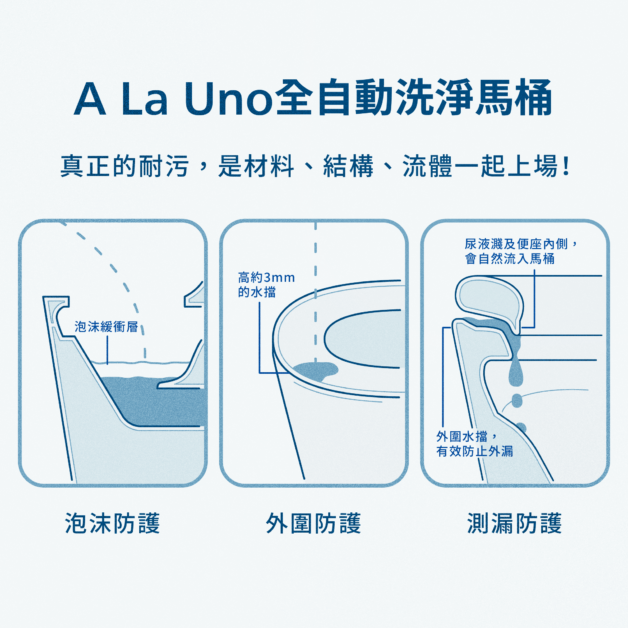
在宏觀結構上,A La Uno 全自動洗淨馬桶採用無水箱沖水與便器、溫水洗淨便座一體成型設計,減少傳統水箱與座體之間的結構層次及接縫,並搭配可動迴轉式排水系統完成沖洗。更貼心的是其「三重防護」設計:
泡沫防護:在水面上製造一層充沛的泡沫緩衝層,有效抑制男性站立小便時的尿液與污水飛濺;
外圍防護:馬桶邊界特別設計了高約 3mm 的水檔,防止液體延著外壁滴落至地板;
測漏防護:便座與馬桶本體採用不外露的防護設計,避免液體從縫隙飛濺滲漏。
Panasonic A La Uno 全自動洗淨馬桶
3. 動態流體層:雙效泡沫洗淨、漩渦水流與 nanoe™ X
當污垢降落在馬桶內壁時,A La Uno全自動洗淨馬桶 的動態流體科技便接手進行徹底打掃。其「雙效泡沫洗淨」會先釋放直徑約 5mm 的「毫米泡沫」包裹並帶走大塊髒污,再透過直徑約 60微米的「微米泡沫」深入微觀縫隙,徹底溶解殘餘的油脂與細微污垢。接著,配合高度清潔力的「漩渦型強力水流」,利用旋轉產生的流體剪切力,一口氣將附著力已被削弱的污垢剝離並沖走。此外,Panasonic A La Uno 全自動洗淨馬桶還搭襯了 nanoe™ X 健康科技,釋放氫氧離子有效抑制異味與髒污,維持空氣與內壁的良好衛生狀態。
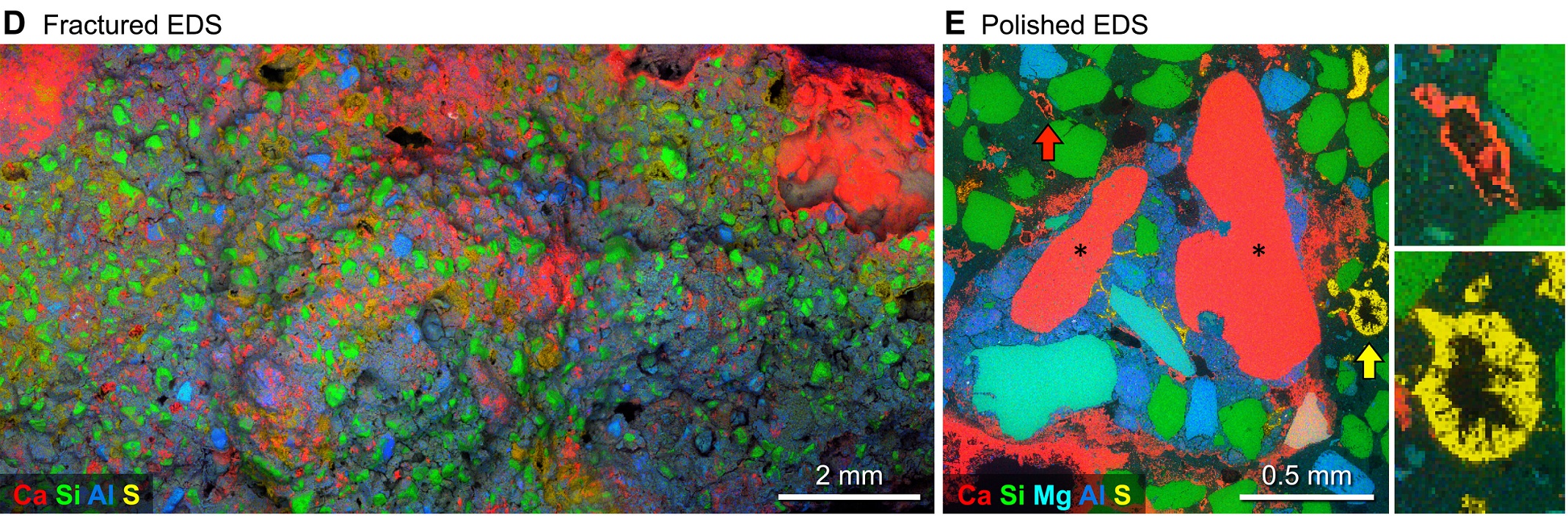
以能量散射X光譜檢驗普里維儂的牆壁砂漿,會發現富含鈣質(紅色)的大塊石灰顆粒,周遭則有鈣、硫(黃)形成的環狀自癒痕跡。Source: Source: Linda M. Seymour et al. ,Hot mixing: Mechanistic insights into the durability of ancient Roman concrete.Sci. Adv.9,eadd1602(2023). CC by 4.0
馬西奇團隊指出,在古羅馬學者維特魯威(Vitruvius)和老普林尼(Pliny the Elder)的記載中,當時對混凝土原料之一的石灰石(limestone, CaCo3 . 碳酸鈣)純化標準相當嚴格,成品必須要呈現純白粉狀。因此他們認為,混凝土中普遍存在的石灰塊不是古羅馬建材商品管鬆散所致,而是刻意加入的材料。
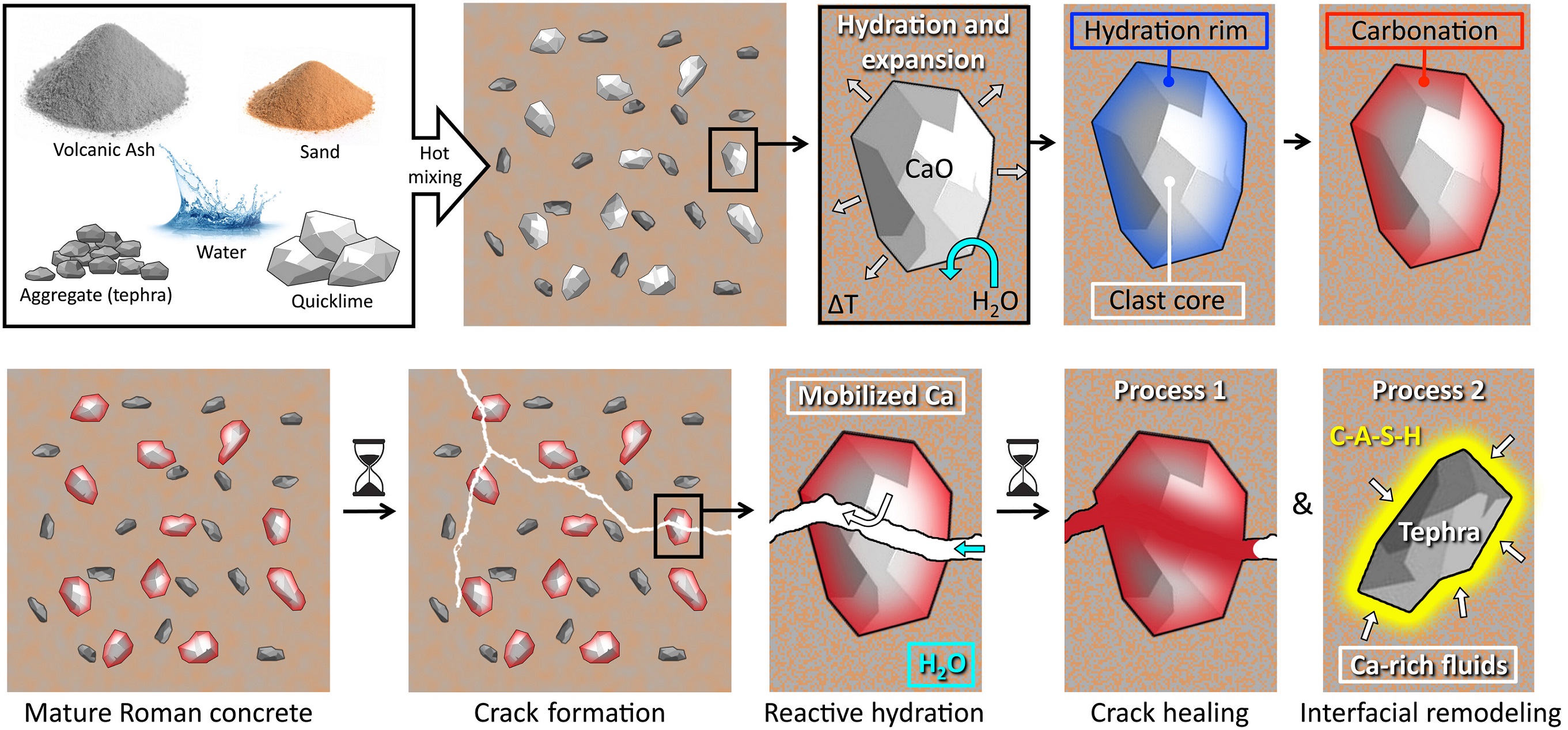
石灰塊在古羅馬混凝土中的自癒運作機制。Source: Linda M. Seymour et al. ,Hot mixing: Mechanistic insights into the durability of ancient Roman concrete.Sci. Adv.9,eadd1602(2023). CC by 4.0
Linda M. Seymour et al. ,Hot mixing: Mechanistic insights into the durability of ancient Roman concrete.Sci. Adv.9,eadd1602(2023).DOI:10.1126/sciadv.add1602
Vaserman, E., Weaver, J.C., Hayhow, C. et al. An unfinished Pompeian construction site reveals ancient Roman building technology. Nat Commun 16, 10847 (2025). https://doi.org/10.1038/s41467-025-66634-7