
Brennan, M. A., McCreery, R. W., Massey, J. (2021). Influence of Audibility and Distortion on Recognition of Reverberant Speech for Children and Adults with Hearing Aid Amplification. Journal of the American Academy of Audiology, 33, 170-180. Doi: 10.1055/a-1678-3381.
Picou, E. M., Gordon, J., Ricketts, T. A. (2016). The Effects of Noise and Reverberation on Listening Effort in Adults With Normal Hearing. Ear and Hearing,37(1), 1-13. Doi: 10.1097/AUD.0000000000000222.
Xu, L., Luo, J., Xie, D., Chao, X., Wang, R., Zahorik, P., Luo, X. (2022). Reverberation Degrades Pitch Perception but Not Mandarin Tone and Vowel Recognition of Cochlear Implant Users. Ear and Hearing, 43(4), 1139-1150. Doi: 10.1097/AUD.0000000000001173.
Farrugia, N., Jakubowski, K., Cusack, R., & Stewart, L. (2015). Tunes stuck in your brain: The frequency and affective evaluation of involuntary musical imagery correlate with cortical structure. Consciousness and cognition, 35, 66-77.
Liikkanen, L. A. (2008). Music in everymind: commonality of involuntary musical imagery. In 10th International Conference of Music Perception and Cognition. Sapporo, Japan, August 2008 (pp. 1-5).
Beaman, C. P. (2018). The literary and recent scientific history of the earworm: A review and theoretical framework. Auditory Perception & Cognition, 1(1-2), 42-65.
Beaman, C. P., & Williams, T. I. (2010). Earworms (stuck song syndrome): Towards a natural history of intrusive thoughts. British Journal of Psychology, 101(4), 637-653.
Albouy, P., Mattout, J., Bouet, R., Maby, E., Sanchez, G., Aguera, P. E., … & Tillmann, B. (2013). Impaired pitch perception and memory in congenital amusia: the deficit starts in the auditory cortex. Brain, 136(5), 1639-1661.
Hyde, K. L., & Peretz, I. (2004). Brains that are out of tune but in time. Psychological science, 15(5), 356-360.
Hyde, K. L., Lerch, J. P., Zatorre, R. J., Griffiths, T. D., Evans, A. C., & Peretz, I. (2007). Cortical thickness in congenital amusia: when less is better than more. Journal of Neuroscience, 27(47), 13028-13032.
Aron, A. R., Robbins, T. W., & Poldrack, R. A. (2004). Inhibition and the right inferior frontal cortex. Trends in cognitive sciences, 8(4), 170-177.
Aron, A. R., Robbins, T. W., & Poldrack, R. A. (2014). Inhibition and the right inferior frontal cortex: one decade on. Trends in cognitive sciences, 18(4), 177-185.
Bernhardt, B. C., Smallwood, J., Tusche, A., Ruby, F. J., Engen, H. G., Steinbeis, N., & Singer, T. (2014). Medial prefrontal and anterior cingulate cortical thickness predicts shared individual differences in self-generated thought and temporal discounting. Neuroimage, 90, 290-297.
Koelsch, S., Skouras, S., & Jentschke, S. (2013). Neural correlates of emotional personality: A structural and functional magnetic resonance imaging study. PLoS One, 8(11), e77196.
Royet, J. P., Zald, D., Versace, R., Costes, N., Lavenne, F., Koenig, O., & Gervais, R. (2000). Emotional responses to pleasant and unpleasant olfactory, visual, and auditory stimuli: a positron emission tomography study. Journal of Neuroscience, 20(20), 7752-7759.
Jakubowski, K., Finkel, S., Stewart, L., & Müllensiefen, D. (2017). Dissecting an earworm: Melodic features and song popularity predict involuntary musical imagery. Psychology of Aesthetics, Creativity, and the Arts, 11(2), 122.
Christina, Y., & Pujiarto, P. (2023). The Effectiveness of Nursery Rhymes Media to Improve English Vocabulary and Confidence of Children (4-5 Years) in Tutor Time Kindergarten. Journal of Education Research, 4(3), 1326-1333.
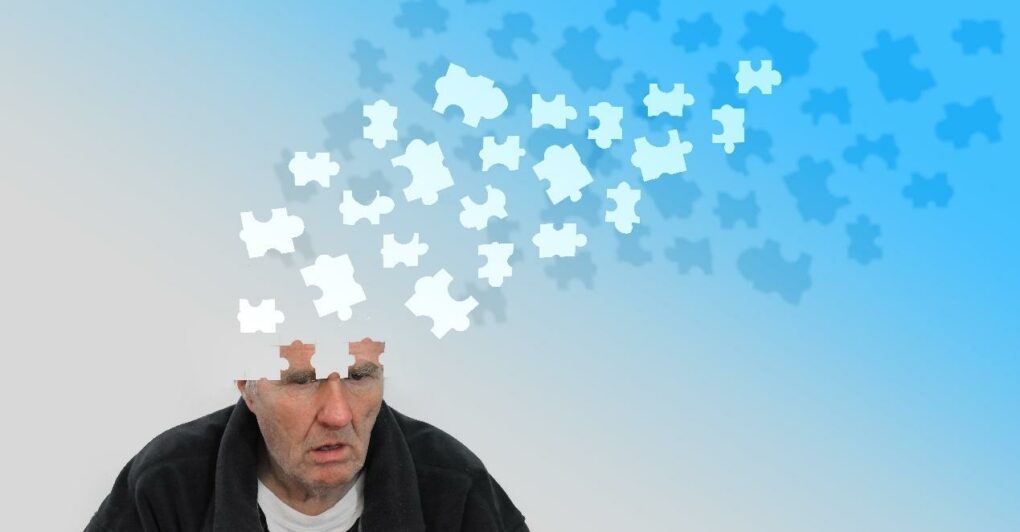
此外,聽損與否也可能會影響一個人大腦的結構與功能。美國約翰霍普金斯大學的研究人員 [10],利用「巴的摩爾老化長期研究(Baltimore Longitudinal Study of Aging)」的資料,針對聽損與腦容量的關係進行了一項有趣的研究,他們分析了一群受試者在逐漸老化時,其腦容量的變化。受試者在研究之初,做了聽力評估,接著接受為期長達十年、每年一次的核磁共振檢查。結果顯示,研究開始時就患有聽損的受試者,相較於聽常者,其大腦有較大幅度的萎縮,平均以每年一立方釐米以上的速度流失大腦組織,而這些大腦組織恰好與輕度認知功能退化和早期失智症所表現出的記憶衰退的行為有關 [11]。
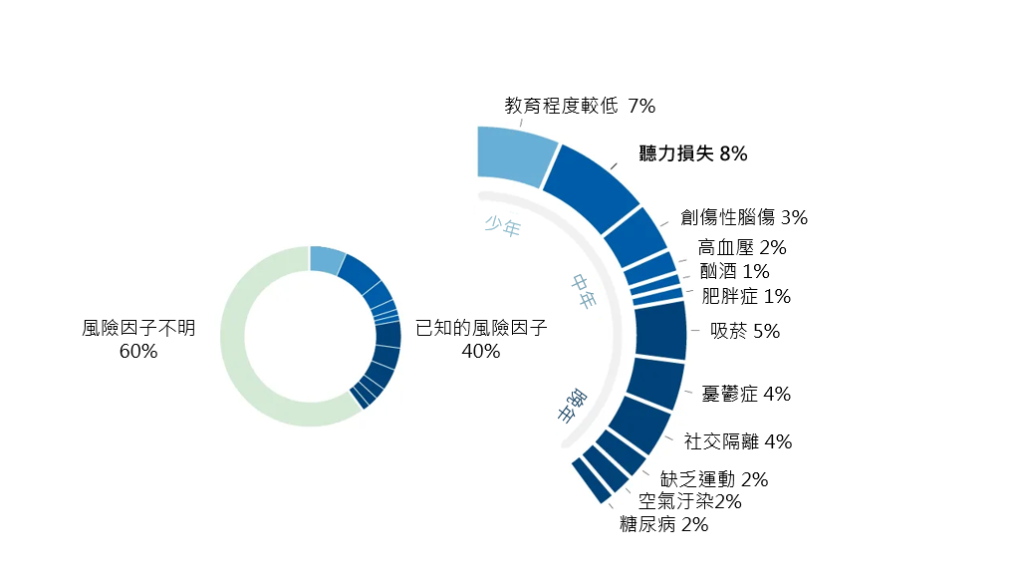
Livingston, G., Huntley, J., Sommerlad, A., Ames, D., Ballard, C., Banerjee, S., … & Mukadam, N. (2020). Dementia prevention, intervention, and care: 2020 report of the Lancet Commission. The Lancet, 396(10248), 413-446.
Lin, F. R., Metter, E. J., O’Brien, R. J., Resnick, S. M., Zonderman, A. B., & Ferrucci, L. (2011). Hearing loss and incident dementia. Archives of Neurology, 68(2), 214-220.
Fulton, S. E., Lister, J. J., Bush, A. L. H., Edwards, J. D., & Andel, R. (2015, August). Mechanisms of the hearing–cognition relationship. In Seminars in Hearing (Vol. 36, No. 03, pp. 140-149). Thieme Medical Publishers.
Mishra, S., Stenfelt, S., Lunner, T., Rönnberg, J., & Rudner, M. (2014). Cognitive spare capacity in older adults with hearing loss. Frontiers in Aging Neuroscience, 6, 96.
Mishra, S., Lunner, T., Stenfelt, S., Rönnberg, J., & Rudnera, M. (2013). Visual Information Can Hinder Working Memory Processing of Speech. Journal of Speech, Language, and Hearing Research, 56, 1120-1132.
Glick, H. A., & Sharma, A. (2020). Cortical neuroplasticity and cognitive function in early-stage, mild-moderate hearing loss: evidence of neurocognitive benefit from hearing aid use. Frontiers in Neuroscience, 93.
Lin, F. R., Ferrucci, L., An, Y., Goh, J. O., Doshi, J., Metter, E. J., … & Resnick, S. M. (2014). Association of hearing impairment with brain volume changes in older adults. Neuroimage, 90, 84-92.
Liu, J., Zhang, X., Yu, C., Duan, Y., Zhuo, J., Cui, Y., … & Liu, Y. (2016). Impaired parahippocampus connectivity in mild cognitive impairment and Alzheimer’s disease. Journal of Alzheimer’s Disease, 49(4), 1051-1064.
Steptoe, A., Shankar, A., Demakakos, P., & Wardle, J. (2013). Social isolation, loneliness, and all-cause mortality in older men and women. Proceedings of the National Academy of Sciences, 110(15), 5797-5801.
Maharani, A., Pendleton, N., & Leroi, I. (2019). Hearing impairment, loneliness, social isolation, and cognitive function: Longitudinal analysis using English longitudinal study on ageing. The American Journal of Geriatric Psychiatry, 27(12), 1348-1356.
Lin, F. R., Metter, E. J., O’Brien, R. J., Resnick, S. M., Zonderman, A. B., & Ferrucci, L. (2011). Hearing loss and incident dementia. Archives of Neurology, 68(2), 214-220.
Paciello, F., Pisani, A., Rinaudo, M., Cocco, S., Paludetti, G., Fetoni, A. R., & Grassi, C. (2023). Noise-induced auditory damage affects hippocampus causing memory deficits in a model of early age-related hearing loss. Neurobiology of Disease, 178, 106024.
[5] Jason Galster & Elizabeth A. Galster.(2011).The Value of Increasing the Number of Channels and Bands in a Hearing Aid. AUDIOLOGYONLINE. Retrieved from https://www.audiologyonline.com/articles/value-increasing-number-channels-and-826.
[7] Karawani, H., Jenkins, K., & Anderson, S. (2022). Neural Plasticity Induced by Hearing Aid Use. Frontiers in aging neuroscience, 14, 884917.