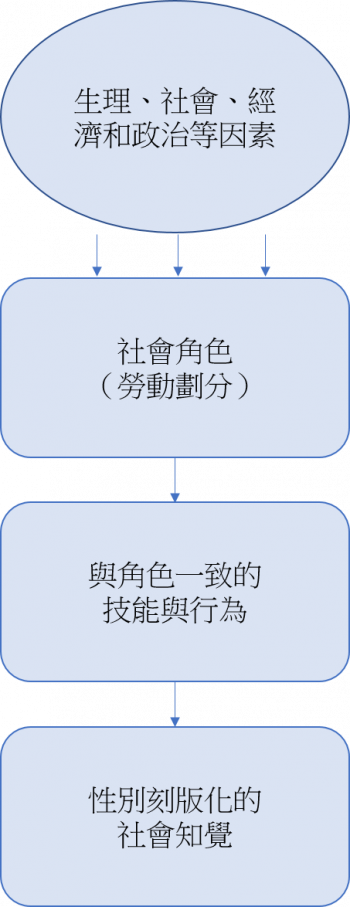
Eagly, A. H. (1987). Sex differences in social behavior: A social-role interpretation. Hillsdale, NJ: Erlbaum.
Eagly, A. H., Wood, W., & Johannesen-Schmidt, M. C. (2004). Social Role Theory of Sex Differences and
Similarities: Implications for the Partner Preferences of Women and Men. In A. H. Eagly, A. E. Beall, & R. J. Sternberg (Eds.), The psychology of gender (p. 269–295). Guilford Press.
王慶福、洪光遠、王郁茗、程淑華(譯)(2006)。社會心理學(原作者: Sharon S. Brehm, Saul Kassin, Steven Fein)。台北市:雙葉書廊出版。
以市面上備受矚目的 Panasonic A La Uno 全自動洗淨馬桶為例,就是將材料科學、結構工程與流體力學發揮到極致的典型代表:
1. 材料層:有機玻璃系新素材
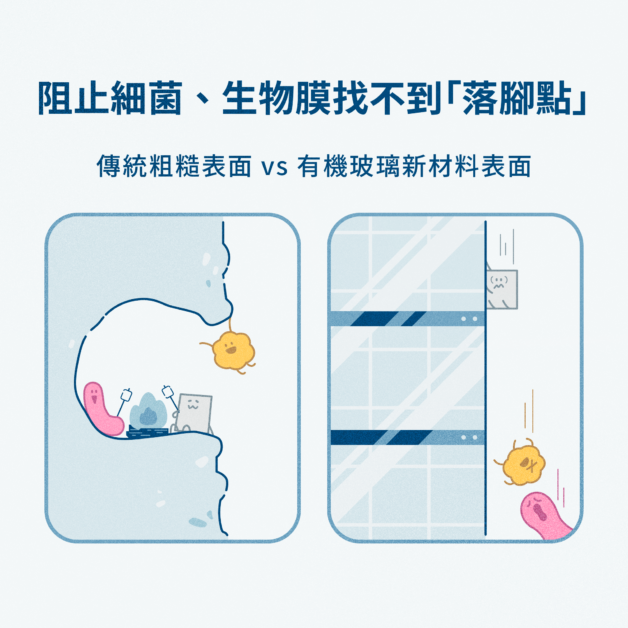
A La Uno 全自動洗淨馬桶採新開發的「有機玻璃系新素材」(以壓克力高分子為基礎研發的衛浴專用材料,這類高分子成形技術亦被廣泛運用於大型水族館高壓觀景窗與飛機機艙罩)。這種材料表面具備極佳的疏水性與耐水垢特性,水滴不易長時間攤平停留;材質堅固、不易破裂,耐刮、不易造成細小傷痕。通過實驗測試,這種素材配合泡沫洗淨,在沖洗後能有效沖刷掉高達 99.99% 的大腸桿菌,從源頭阻斷細菌定殖。
-----廣告,請繼續往下閱讀-----
2. 結構層:無接縫工藝與三重防濺防護
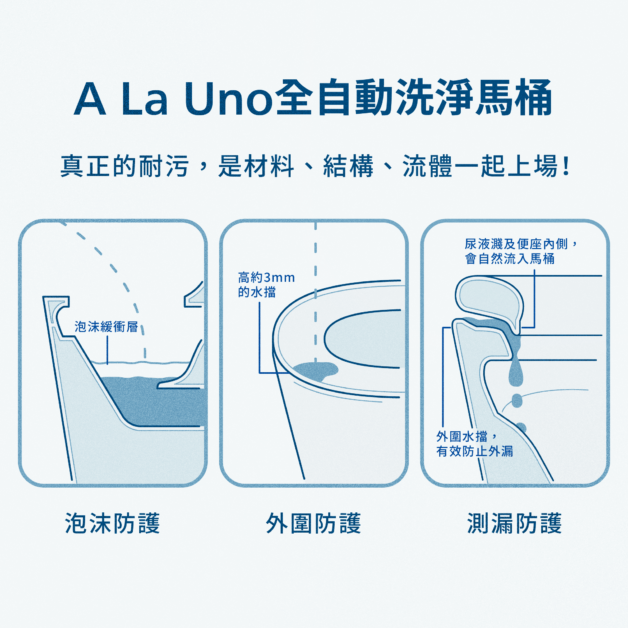
在宏觀結構上,A La Uno 全自動洗淨馬桶採用無水箱沖水與便器、溫水洗淨便座一體成型設計,減少傳統水箱與座體之間的結構層次及接縫,並搭配可動迴轉式排水系統完成沖洗。更貼心的是其「三重防護」設計:
泡沫防護:在水面上製造一層充沛的泡沫緩衝層,有效抑制男性站立小便時的尿液與污水飛濺;
外圍防護:馬桶邊界特別設計了高約 3mm 的水檔,防止液體延著外壁滴落至地板;
測漏防護:便座與馬桶本體採用不外露的防護設計,避免液體從縫隙飛濺滲漏。
Panasonic A La Uno 全自動洗淨馬桶
3. 動態流體層:雙效泡沫洗淨、漩渦水流與 nanoe™ X
當污垢降落在馬桶內壁時,A La Uno全自動洗淨馬桶 的動態流體科技便接手進行徹底打掃。其「雙效泡沫洗淨」會先釋放直徑約 5mm 的「毫米泡沫」包裹並帶走大塊髒污,再透過直徑約 60微米的「微米泡沫」深入微觀縫隙,徹底溶解殘餘的油脂與細微污垢。接著,配合高度清潔力的「漩渦型強力水流」,利用旋轉產生的流體剪切力,一口氣將附著力已被削弱的污垢剝離並沖走。此外,Panasonic A La Uno 全自動洗淨馬桶還搭襯了 nanoe™ X 健康科技,釋放氫氧離子有效抑制異味與髒污,維持空氣與內壁的良好衛生狀態。
同樣的,讓女性或少數族群擔綱過往由男性把持的英雄角色,也是在提供觀眾一種新的角色模板。例如哈利波特裡最聰明、能力最強的並不是被預言選上唯一能與佛地魔對抗的哈利,而是麻瓜出身的妙麗。先不討論作者 JK 羅琳近年與 LGBTQ 族群起的爭議,在 21 世紀初期,那位願意一拳揍上馬份鼻子、永遠是第一個想出困境解法的年輕女巫可是西方女性培力的代言人,成為許多年輕女孩嚮往與效仿的對象。
或許不是每部影視作品都能像哈利波特或迪士尼形塑一整個世代的社會風氣,又或者像人選之人這樣啟發前所未有的 Me Too 運動,但他們多少反映了我們現在身處的環境,同時為他的改變與延續做出一點貢獻。從這個角度去想,你會發現政治正確並不是現在才有的現象,而是從古至今一直都有的創作取向。而之所以「政治正確」會在現代引起如此大的爭議,其實還得歸功我們成功打破了刻板印象,以致於大家都有了「正確答案不只一種」的認知,這才會對與自身想法不同的答案表達質疑,不是嗎?
對了,你最近看過的戲劇作品中,哪些作品的性別呈現最深得你心呢?歡迎跟我們分享吧!我先說,我自己最愛的是《八尺門的辯護人》裡的 Leena 跟陳令秋,那你呢?
Corwin, H. J. (1998). Reading with empathy: The effect of self-schema and gender-role identity on readers’ empathic identification with literary characters (Order No. 9937004). Available from ProQuest Dissertations & Theses A&I. (304459026). Retrieved from http://search.proquest.com/docview/30…
Giezrzynski, A., & Eddy, K. (2013). Harry Potter and the Millennials: Research Methods and the Politics of the Muggle Generation. JHU Press.
Kaufman, G. F., & Libby, L. K. (2012). Changing beliefs and behavior through experience-taking. Journal of personality and social psychology, 103(1), 1.
Kidd, D. C., & Castano, E. (2013). Reading literary fiction improves theory of mind. Science, 2013, 342.6156: 377-380.
Klodt, J. E. (2003). Sex, drugs, and self-destruction: Reading decadence and identity in spain’s youth narrative.
Todd, A. R., & Galinsky, A. D. (2014). Perspective‐taking as a strategy for improving intergroup relations: Evidence, mechanisms, and qualifications. Social and Personality Psychology Compass, 8(7), 374-387.
Green, M. C., & Jenkins, K. M. (2014). Interactive narratives: Processes and outcomes in user-directed stories. Journal of Communication, 64(3), 479-500.
England, D. E., Descartes, L., & Collier-Meek, M. A. (2011). Gender role portrayal and the Disney princesses. Sex roles, 64, 555-567.
Streiff, M., & Dundes, L. (2017). Frozen in time: How Disney gender-stereotypes its most powerful princess. Social Sciences, 6(2), 38.
Garabedian, J. (2015). Animating gender roles: How Disney is redefining the modern princess. James Madison Undergraduate Research Journal (JMURJ), 2(1), 4.
Hoerrner, K. L. (1996). Gender roles in Disney films: Analyzing behaviors from Snow White to Simba. Women’s studies in communication, 19(2), 213-228.
Wiersma, B. A. (2000). The gendered world of Disney: A content analysis of gender themes in full-length animated Disney feature films. South Dakota State University.
Hunt, S. (2015). Representations of gender and agency in the Harry Potter series. In Corpora and discourse studies: Integrating discourse and corpora (pp. 266-284). London: Palgrave Macmillan UK.
Hoerrner, K. L. (1996). Gender roles in Disney films: Analyzing behaviors from Snow White to Simba. Women’s studies in communication, 19(2), 213-228.
Bem, S. L. (1983). Gender schema theory and its implications for child development: Raising gender-aschematic children in a gender-schematic society. Signs: Journal of women in culture and society, 8(4), 598-616.
Bem, S. L. (1981). Gender schema theory: A cognitive account of sex typing. Psychological review, 88(4), 354.
Starr, C. R., & Zurbriggen, E. L. (2017). Sandra Bem’s gender schema theory after 34 years: A review of its reach and impact. Sex Roles, 76, 566-578.




























 a0921003785彼得 潘


