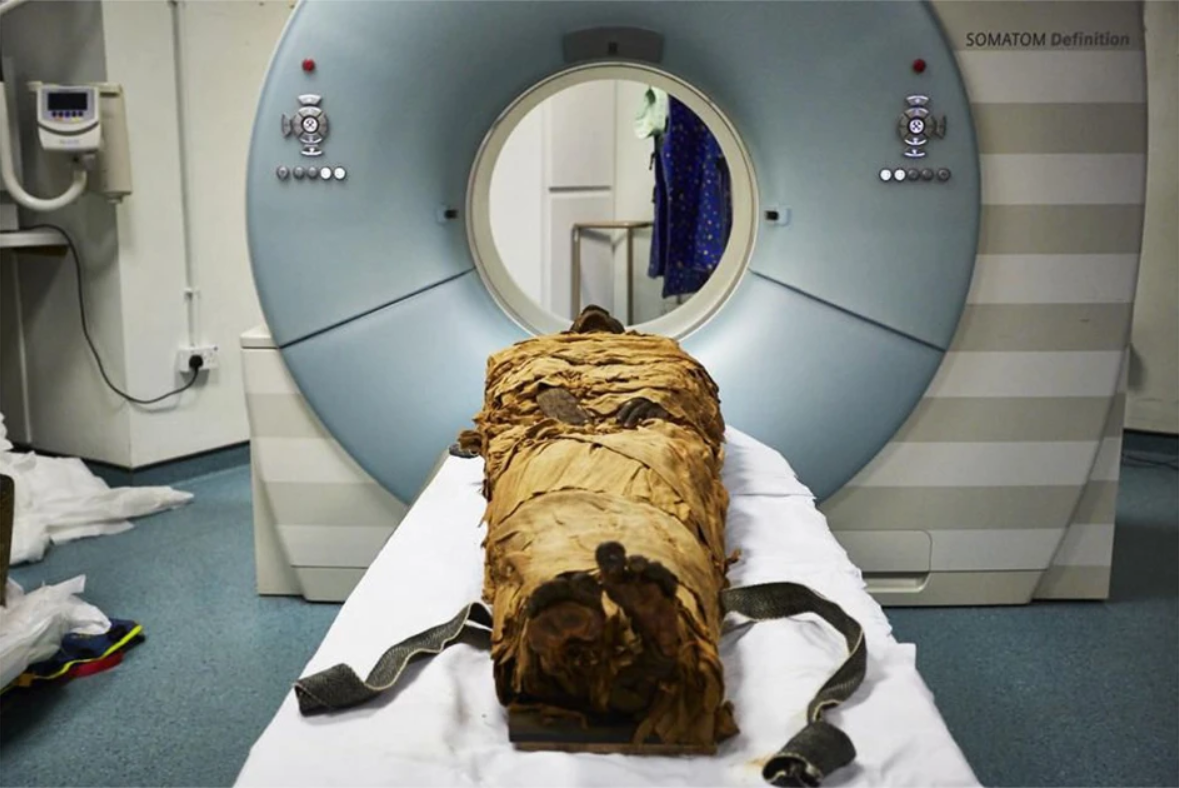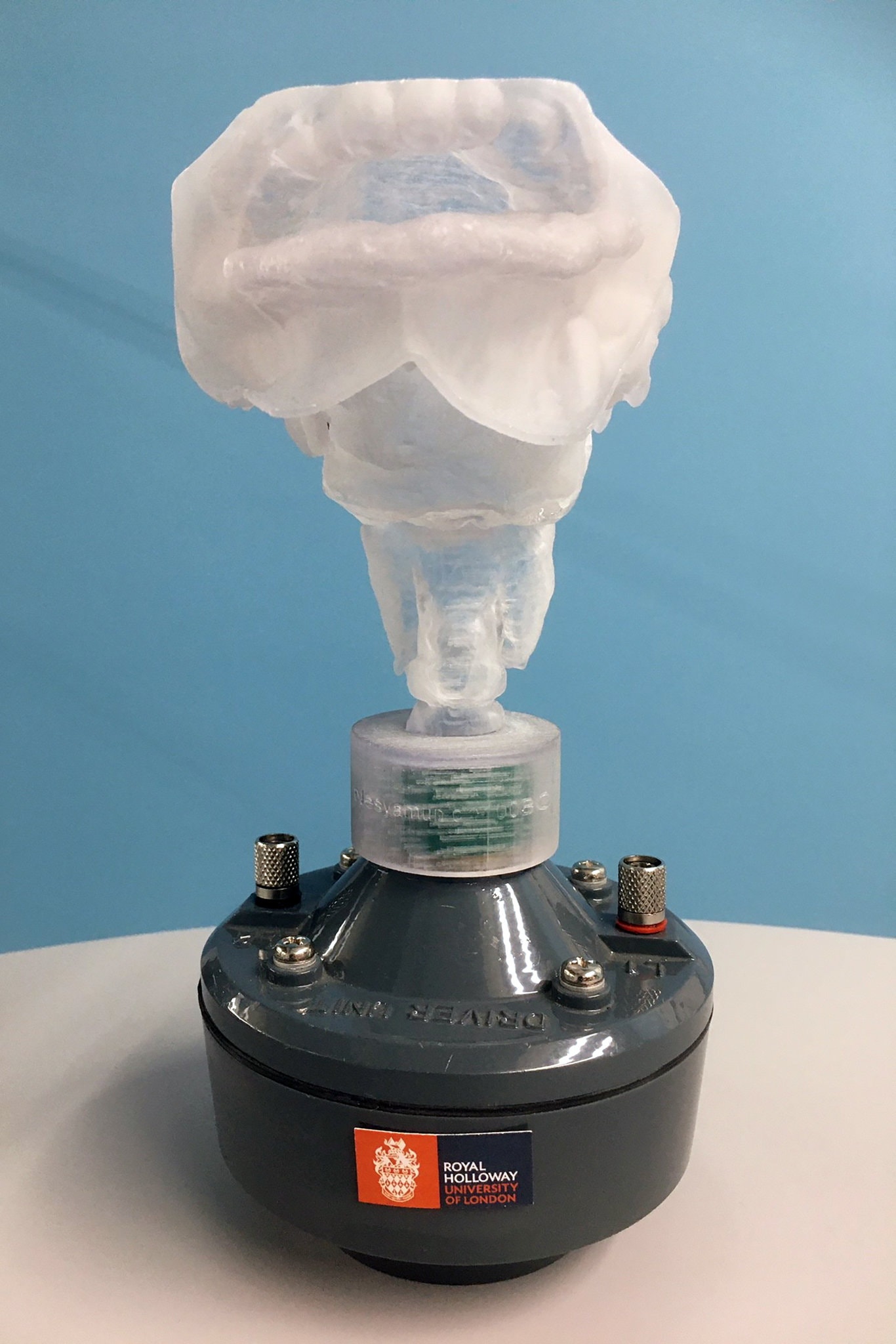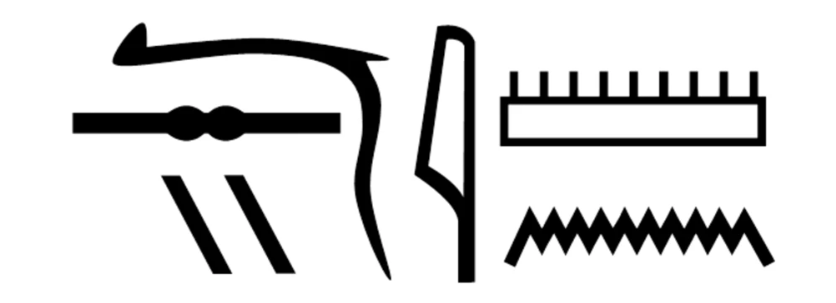

Howard, D.M., Schofield, J., Fletcher, J. et al. Synthesis of a Vocal Sound from the 3,000 year old Mummy, Nesyamun ‘True of Voice’. Sci Rep 10, 45000 (2020). https://doi.org/10.1038/s41598-019-56316-y
Howard DM. The Vocal Tract Organ: A New Musical Instrument Using 3-D Printed Vocal Tracts. J Voice. 2018;32(6):660-667. doi:10.1016/j.jvoice.2017.09.014
而另一種,那個開冰箱慢吞吞的機器人,雖然看起來笨,卻是在做一件革命性的事:它正在試圖由 AI 驅動,真正開始「理解」這個世界 。它在學習什麼是冰箱、什麼是蘋果、以及如何控制自己的力量才能順利拿起它。這個過程之所以緩慢,正是因為過去驅動它的「大腦」,也就是 AI 晶片的算力還不夠強,無法即時處理與學習現實世界中無窮的變數 。
這就是關鍵! 過去以NVIDIA Jetson Orin™作為大腦的機器人,僅能以有限的速度運行VLA模型。而由 VLA 模型驅動,讓 AI 能夠感知、理解並直接與物理世界互動的全新形態,正是「物理 AI」(Physical AI)的開端 。NVIDIA Jetson Thor 的強大算力,就是為了滿足物理 AI 的嚴苛需求而生,要讓機器人擺脫「復健」,迎來真正自主、流暢的行動時代 。
NVIDIA Jetson Thor 的強大算力,就是為了滿足物理 AI 的嚴苛需求而生,要讓機器人擺脫「復健」,迎來真正自主、流暢的行動時代 / 圖片來源:研華科技
其中,物理 AI 強調的 vision to action,就需要研華設計對應的硬體來實現;譬如視覺可能來自於一般相機、深度相機、紅外線相機甚至光達,你的系統就要有對應的介面來整合視覺;你也會需要控制介面去控制馬達伸長手臂或控制夾具拿取物品;你也要有 WIFI、4G 或 5G 來傳輸資料或和別的 AI 溝通,這些都需要具體化到一個系統上,這個系統的集大成就是機器人。
從樓梯的階高、門把的設計,到桌椅的高度,無一不是為了適應人類的雙足、雙手與身高而存在 。對 AI 而言,採用人形的軀體,意味著它能用與我們最相似的視角與方式去感知和學習這個世界,進而最快地理解並融入人類環境 。這背後的邏輯是,與其讓 AI 去適應千奇百怪的非人形設計,不如讓它直接採用這個已經被數千年人類文明「驗證」過的最優解 。
這也區分了「通用型 AI 人形機器人」與「專用型 AI 工業自動化設備」的本質不同 。後者像高度特化的工具,產線上的機械手臂能高效重複鎖螺絲,但它無法處理安裝柔軟水管這種預設外的任務 。而通用型人形機器人的目標,是成為一個「多面手」,它能在廣泛學習後,理解物理世界的運作規律 。理論上,今天它在產線上組裝伺服器,明天就能在廚房裡學會煮菜 。
Ferrer-Torres, A., & Giménez-Llort, L. (2022). Misophonia: A Systematic Review of Current and Future Trends in This Emerging Clinical Field. International journal of environmental research and public health, 19(11), 6790. https://doi.org/10.3390/ijerph19116790
Jastrebo, M. M., and Jastrebo, P. J. (2001). Components of decreased sound tolerance: hyperacusis, misophonia, phonophobia. ITHS News Lett 2, 1–5.
Henry, J. A., Theodoroff, S. M., Edmonds, C., Martinez, I., Myers, P. J., Zaugg, T. L., & Goodworth, M. C. (2022). Sound Tolerance Conditions (Hyperacusis, Misophonia, Noise Sensitivity, and Phonophobia): Definitions and Clinical Management. American journal of audiology, 31(3), 513–527. https://doi.org/10.1044/2022_AJA-22-00035
Jastreboff, M. M., & jastreboff, P. J. (2001, June 18). Hyperacusis. Audiologyonline. https://www.audiologyonline.com/articles/hyperacusis-1223
Cederroth, C. R., Lugo, A., Edvall, N. K., Lazar, A., Lopez-Escamez, J. A., Bulla, J., Uhlen, I., Hoare, D. J., Baguley, D. M., Canlon, B., & Gallus, S. (2020). Association between hyperacusis and tinnitus. Journal of Clinical Medicine, 9(8), 2412. https://doi.org/10.3390/jcm9082412
Jager, I., de Koning, P., Bost, T., Denys, D., & Vulink, N. (2020). Misophonia: Phenomenology, comorbidity and demographics in a large sample. PloS one, 15(4), e0231390. https://doi.org/10.1371/journal.pone.0231390
Swedo, S. E., Baguley, D. M., Denys, D., Dixon, L. J., Erfanian, M., Fioretti, A., Jastreboff, P. J., Kumar, S., Rosenthal, M. Z., Rouw, R., Schiller, D., Simner, J., Storch, E. A., Taylor, S., Werff, K. R. V., Altimus, C. M., & Raver, S. M. (2022). Consensus Definition of Misophonia: A Delphi Study. Frontiers in neuroscience, 16, 841816. https://doi.org/10.3389/fnins.2022.841816
Zuschlag, Z. D., & Leventhal, K. C. (2021). Rapid and Sustained Resolution of Misophonia-Type Hyperacusis With the Selective Serotonin Reuptake Inhibitor Sertraline. The primary care companion for CNS disorders, 23(3), 20l02731. https://doi.org/10.4088/PCC.20l02731
Sarigedik, E., & Yurteri, N. (2021). Misophonia Successfully Treated of With Fluoxetine: A Case Report. Clinical neuropharmacology, 44(5), 191–192. https://doi.org/10.1097/WNF.0000000000000465
Webb, J., & Williamson, A. (2024). Steroids for the Treatment of Misophonia and Misokinesia. Case reports in psychiatry, 2024, 3976837. https://doi.org/10.1155/2024/3976837
Dozier, T. (2016). Misophonia Trigger Apps. Misophonia Treatment Institute. https://misophoniatreatment.com/misophonia-apps/
Halpern, D. L., Blake, R., & Hillenbrand, J. (1986). Psychoacoustics of a chilling sound. Perception & Psychophysics, 39, 77-80.
Kumar, S., Forster, H. M., Bailey, P., & Griffiths, T. D. (2008). Mapping unpleasantness of sounds to their auditory representation. The Journal of the Acoustical Society of America, 124(6), 3810-3817.
Ro, T., Ellmore, T. M., & Beauchamp, M. S. (2013). A neural link between feeling and hearing. Cerebral cortex, 23(7), 1724-1730.
Koenig, L., & Ro, T. (2022). Sound Frequency Predicts the Bodily Location of Auditory-Induced Tactile Sensations in Synesthetic and Ordinary Perception. bioRxiv.
Lad, D., Wilkins, A., Johnstone, E., Vuong, Q.C. (2022). Feeling the music: The feel and sound of songs attenuate pain. British Journal of Pain, 16(5), 518-527.
Zald, D. H., & Pardo, J. V. (2002). The neural correlates of aversive auditory stimulation. Neuroimage, 16(3), 746-753.
LeDoux, J. E. (2000). Emotion circuits in the brain. Annual review of neuroscience, 23(1), 155-184.
Kumar, S., von Kriegstein, K., Friston, K., & Griffiths, T. D. (2012). Features versus feelings: dissociable representations of the acoustic features and valence of aversive sounds. Journal of Neuroscience, 32(41), 14184-14192.