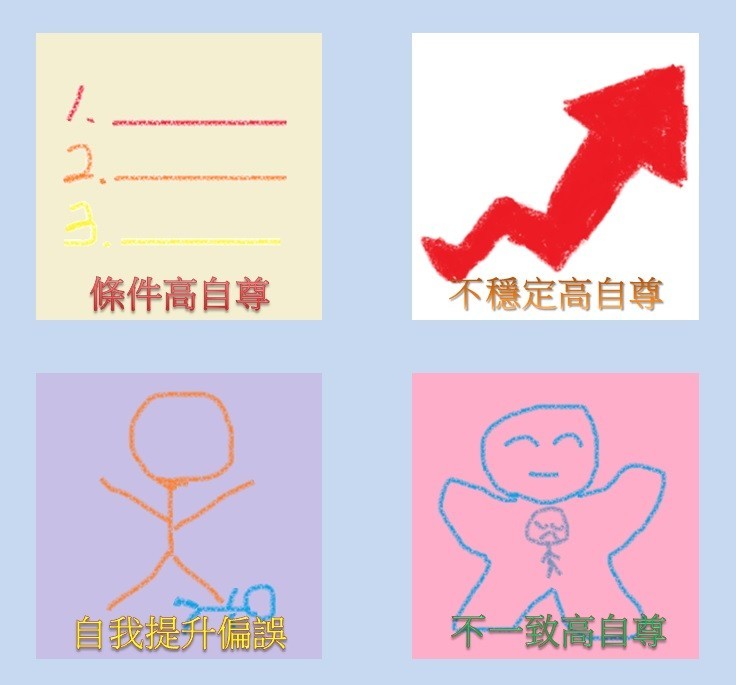
近年來,心理學對於自尊心的研究,有了更進一步的進展。過去,我們都覺得高自尊的人,應該會過得比低自尊的人來得更好;但是,後來的研究卻發現,有一些高自尊的人,其實過得不是那麼的快樂。我們應該也有過類似的經驗吧!身邊有一些高自尊的朋友,他們會不斷地散發能量,來關心身邊的人;但是有另一群高自尊的人,是不斷透過向下比較、貶抑嘲諷他人的方式,來維持自己的高自尊。心理學家Michael Kernis發現,那是因為後面的那群人,並不是真的那麼高自尊,Kernis把他們稱為脆弱高自尊(fragile high self-esteem)[2]。脆弱高自尊包含了三種:不一致高自尊( inconsistencies high self-esteem)、不穩定高自尊(unstable high self-esteem )、條件高自尊(conditions of high self-esteem)。
-----廣告,請繼續往下閱讀-----
不一致高自尊的人,如果用一般的自尊量表來測驗他們,會發現他們是高自尊的人;前面提到的那種,不斷透過嘲諷、貶抑他人,來維持自己高自尊的人,就是屬於這一類。但是當我們用一種稱為內隱連結測驗(Implicit Association Test,IAT)[3]的方式,來測量他們內心的真實想法時,會發現他們和真正的高自尊不同,他們內心的自尊心是很低的,只是他們害怕被拆穿,所以必須不斷偽裝自己,來使得自己看起來光鮮亮麗[4]。
Michael H. Kernis (2003)Toward a Conceptualization of Optimal Self-Esteem. Department of Psychology and Institute for Behavioral Research.University of Georgia.Psychological Inquiry 2003, Vol. 14, No. 1, 1–26
Greenwald, A. G., McGhee, D. E., & Schwartz, J. L. K. (1998). Measuring individual differences in implicit cognition: The Implicit Association Test. Journal of Personality and Social Psychology, 74, 1464 –1480.
Jennifer K. Bosson, Chad E. Lakey, W. Keith Campbell , Virgil Zeigler-Hill , Christian H. Jordan,Michael H. Kernis(2008)Untangling the Links between Narcissism and Self-esteem: A Theoretical and Empirical Review.Social and Personality Psychology Compass 2/3 (2008): 1415–1439, 10.1111/j.1751-9004.2008.00089.x
Kernis, M.H., Cornell, D.P., Sun, C.R., Berry, A., & Harlow, T. (1993).There’s more to self-esteem than whether it is high or low: The importance of stability of self-esteem. Journal of Personality, 65, 6
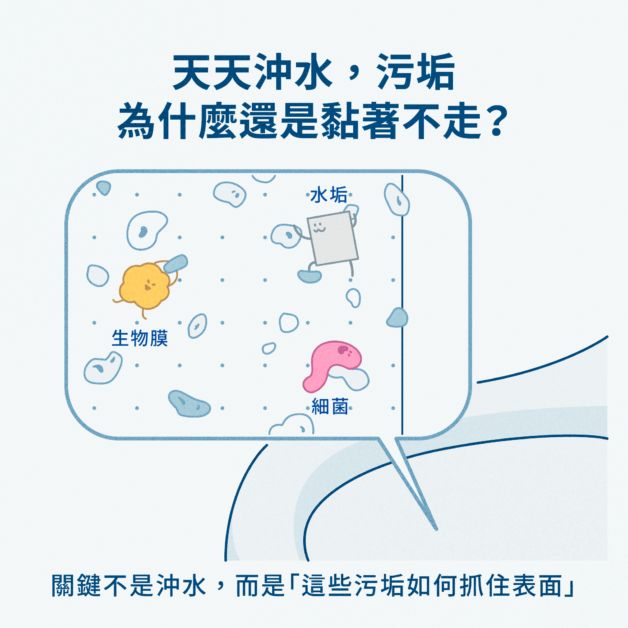
以市面上備受矚目的 Panasonic A La Uno 全自動洗淨馬桶為例,就是將材料科學、結構工程與流體力學發揮到極致的典型代表:
1. 材料層:有機玻璃系新素材
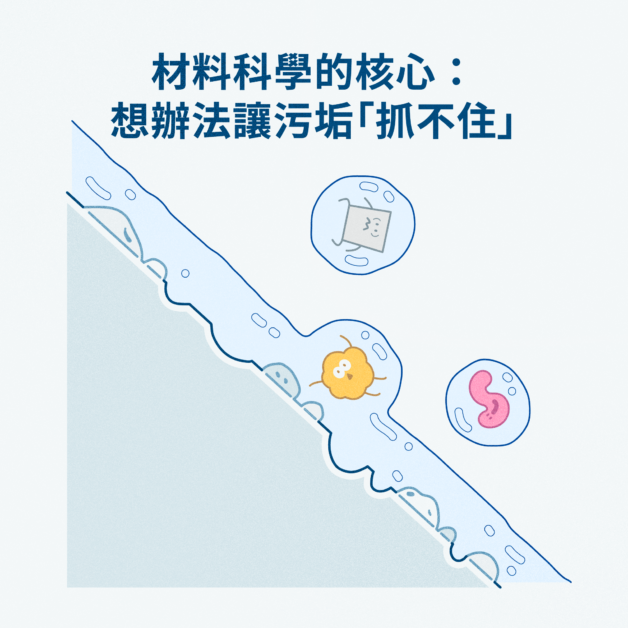
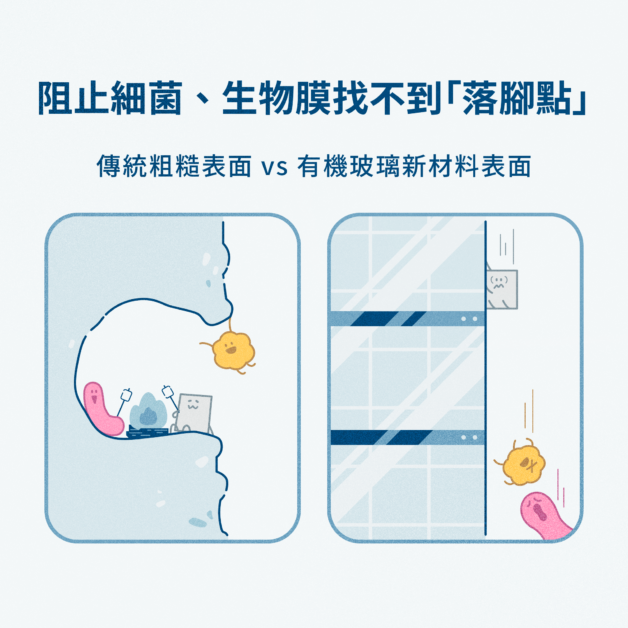
A La Uno 全自動洗淨馬桶採新開發的「有機玻璃系新素材」(以壓克力高分子為基礎研發的衛浴專用材料,這類高分子成形技術亦被廣泛運用於大型水族館高壓觀景窗與飛機機艙罩)。這種材料表面具備極佳的疏水性與耐水垢特性,水滴不易長時間攤平停留;材質堅固、不易破裂,耐刮、不易造成細小傷痕。通過實驗測試,這種素材配合泡沫洗淨,在沖洗後能有效沖刷掉高達 99.99% 的大腸桿菌,從源頭阻斷細菌定殖。
-----廣告,請繼續往下閱讀-----
2. 結構層:無接縫工藝與三重防濺防護
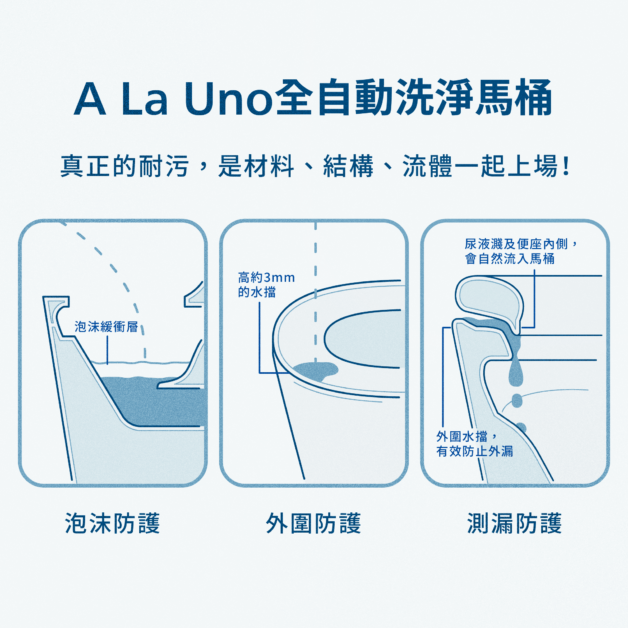
在宏觀結構上,A La Uno 全自動洗淨馬桶採用無水箱沖水與便器、溫水洗淨便座一體成型設計,減少傳統水箱與座體之間的結構層次及接縫,並搭配可動迴轉式排水系統完成沖洗。更貼心的是其「三重防護」設計:
泡沫防護:在水面上製造一層充沛的泡沫緩衝層,有效抑制男性站立小便時的尿液與污水飛濺;
外圍防護:馬桶邊界特別設計了高約 3mm 的水檔,防止液體延著外壁滴落至地板;
測漏防護:便座與馬桶本體採用不外露的防護設計,避免液體從縫隙飛濺滲漏。
Panasonic A La Uno 全自動洗淨馬桶
3. 動態流體層:雙效泡沫洗淨、漩渦水流與 nanoe™ X
當污垢降落在馬桶內壁時,A La Uno全自動洗淨馬桶 的動態流體科技便接手進行徹底打掃。其「雙效泡沫洗淨」會先釋放直徑約 5mm 的「毫米泡沫」包裹並帶走大塊髒污,再透過直徑約 60微米的「微米泡沫」深入微觀縫隙,徹底溶解殘餘的油脂與細微污垢。接著,配合高度清潔力的「漩渦型強力水流」,利用旋轉產生的流體剪切力,一口氣將附著力已被削弱的污垢剝離並沖走。此外,Panasonic A La Uno 全自動洗淨馬桶還搭襯了 nanoe™ X 健康科技,釋放氫氧離子有效抑制異味與髒污,維持空氣與內壁的良好衛生狀態。
當我們採用內隱連結測驗(Implicit association tests,IAT,一種可以測量人們內在真實想法的測驗),來測量他們的內在自尊時,會發現他們總會用很負面的語詞來描述他們自己[25],儘管他們口頭上並不承認這點。這也是為什麼傳統的自尊量表無法測出藍丘和查托的不同,因為他們兩個都會在自尊量表上勾選符合高自尊者的描述,即使查托是個道道地地的脆弱高自尊者。
Michael Kernis先生說,當一個小孩子被鼓勵去拒絕、壓抑他們的真實情緒時,他就越有可能發展成脆弱高自尊[1]。回想我們的童年經驗,在這個升學主義至上的國家,除了名次和獎狀之外,我們又有哪些價值呢?而許多人遇到挫折時,父母不能用正確的方式教導我們,總要我們去壓抑自己的憤怒、不安、焦慮、難過,如此一來,我們又要如何去面對真實的自我,弄清自我概念,追求內在價值呢?
Kernis, M. H. (2003). Toward a conceptualization of optimal self-esteem. Psychological Inquiry, 14, 1-26.
Crocker, J. (2002). Contingencies of self-worth: Implications for self-regulation and psychological vulnerability. Self and Identify, 1, 143-150.
Crocker, J., & Wolfe, C. T. (2001). Contingencies of self-worth. Psychological Review, 108, 108-593.
Deci, E. L., & Ryan, R. M. (1985). Intrinsic motivation and self-determination in human behavior. New York: Plenum.
Deci, E. L., & Ryan, R. M. (1995). Human agency: The basis for true self-esteem. In M. H. Kernis (Ed.), Efficacy, agency,and self-esteem (pp. 31-50). New York: Plenum.
Kernis, M. H., Jadrich, J., Stoner, P., & Sun, C. R. (1996). Stable and unstable components of self-evaluations: Individual differences in self-appraisal responsiveness to feedback.Journal of Social & Clinical Psychology, 15, 430-448.
Greenier, K. G., Kernis, M. H., Whisenhunt, C. R., Waschull, S. B., Berry, A. J., Herlocker, C. E., & Abend, T. (1999). Individual differences in reactivity to daily events: Examining the roles of stability and level of self-esteem. Journal of Personality, 67, 185-208.
Kernis, M. H., Paradise, A. W.,Whitaker, D., Wheatman, S., & Goldman, B. (2000). Master of one’s psychological domain? Not likely if one’s self-esteem is unstable. Personality & Social Psychology Bulletin,26, 297-305.
Kernis, M. H., Greenier, K. D., Herlocker, C. E., Whisenhunt, C. W., & Abend, T. (1997). Self-perceptions of reactions to positive and negative outcomes:The roles of stability and level of self-esteem. Personality & Individual Differences, 22, 846-854.
Riketta, M., & Ziegler, R. (2007). Self-ambivalence and reactions to success versus failure. European Journal of Social Psychology, 37, 547-560.
Campbell, J. D. (1990). Self-esteem and clarity of the self-concept. Journal of Personality and Social Psychology, 59, 538-549.
Campbell, J. D. (1990). Self-esteem and clarity of the self-concept. Journal of Personality and Social Psychology, 59, 538-549.
Lewandowski, G. W., Nardone, N., & Raines, A. J. (2010). The role of self-concept clarity in relationship quality. Self and Identity, 9, 416-433.
Rothschild, Z. K., Landau, M. J., & Sullivan, D. (2011). By the numbers: Structure-seeking individuals prefer quantitative over qualitative representations of personal value to compensate for the threat of unclear performance contingencies. Personality and Social Psychology Bulletin, 37, 1508-1521. doi: 10.1177/0146167211415421
Schneider, D. J., & Turkat, D. (1975). Self-presentation following success or failure: Defensive self-esteem models.Journal of Personality, 43, 127-135.
Kim, Y., Chiu, C., & Zou, Z. (2010). Know thyself: Misperceptions of actual performance undermine achievement motivation, future performance, and subjective well-being. Journal of Personality and Social Psychology, 99, 395-409.
Farnham, S. D., Greenwald, A. G., & Banaji, M. R. (1999). Implicit self-esteem. In D. A brains, & M. A. Hogg (Eds.), Social identity and social cognition (pp. 230-248).
London: Blackwell. Hetts, J., Sakuma, M., & Pelham, B. (1999). Two roads to positive regard: Implicit and explicit self-evaluation and culture. Journal of Experimental Social Psychology, 35, 512-559.
Kitayama, S., & Karasawa, M. (1997). Implicit self-esteem in Japan: Name letters and birthday numbers. Personality and Social Psychology Bulletin, 23, 736-742.
Koole, S. L., Dijksterhuis, A., & van Knippenberg, A. (2001). What’s in a name: Implicit self-esteem and the automatic self. Journal of Personality and Social Psychology, 80, 669-685.
Koole, S. L., & Pelham, B. W. (2003). On the nature of implicit self-esteem: The case of the name letter effect. In S. J. Spencer, S. Fein, M. P. Zanna, & J. M. Olson (Eds.), Motivated social perception: The Ontario symposium (Vol. 9, pp. 93-116). Mahwah, NJ: Lawrence Erlbaum Associates.
Nuttin, J. M. (1985). Narcissism beyond gestalt and awareness: The name letter effect. European Journal of Social Psychology, 15, 353-361.
Nuttin, J. M. (1987). Affective consequences of mere ownership: The name letter effect in twelve European languages. European Journal of Social Psychology, 17, 381-402.
Gebauer, J. E., Riketta, M., Broemer, P., & Maio, G. R. (2008). “How must do you like your name”? An implicit measure of global self-esteem. Journal of Experimental Social Psychology, 44, 1346-1354.
Greenwald, A. G., & Farnham, S. D. (2000). Using the implicit association test to measure self-esteem and self-concept. Journal of Personality and Social Psychology, 79, 1022-1038.
Bosson, J. K., Brown, R. P., Zeigler-Hill, V., & Swann, W. B., Jr. (2003). Self-enhancement tendencies among people with high explicit self-esteem: The moderating role of implicit self-esteem. Self and Identity, 2, 169-187.
Epstein, S., & Morling, B. (1995). Is the self motivated to do more than enhance and/or verify itself In M. H. Kernis (Ed.), Efficacy, agency, and self-esteem (pp. 9-30). New York: Plenum Press.
Jordan, C. H., Spencer, S. J., & Zanna, M. P. (2005). Types of high self-esteem and prejudice: How implicit self-esteem relates to ethnic discrimination among high explicit self-esteem individuals. Personality and Social Psychology Bulletin, 31, 693-702.
Schroder-Abe, M., Rudolph, A., & Schutz, A.(2007). High implicit self-esteem is not necessarily advantageous: discrepancies between explicit and implicit self-esteem and their relationship with anger expression and psychological health. European Journal of Personality, 21, 319-339.
Schlegel, R. J., Hicks, J. A, Davis, W. E., Hirsch, K. A, & Smith, C. M. (2013). The dynamic interplay between perceived true self-knowledge and decision satisfaction.Journal of Personality and Social Psychology, 104, 542-558. doi:10.1037/a0031183
近年來,心理學對於自尊心的研究,有了更進一步的進展。過去,我們都覺得高自尊的人,應該會過得比低自尊的人來得更好;但是,後來的研究卻發現,有一些高自尊的人,其實過得不是那麼的快樂。我們應該也有過類似的經驗吧!身邊有一些高自尊的朋友,他們會不斷地散發能量,來關心身邊的人;但是有另一群高自尊的人,是不斷透過向下比較、貶抑嘲諷他人的方式,來維持自己的高自尊。心理學家Michael Kernis發現,那是因為後面的那群人,並不是真的那麼高自尊,Kernis把他們稱為脆弱高自尊(fragile high self-esteem)[2]。脆弱高自尊包含了三種:不一致高自尊( inconsistencies high self-esteem)、不穩定高自尊(unstable high self-esteem )、條件高自尊(conditions of high self-esteem)。
不一致高自尊的人,如果用一般的自尊量表來測驗他們,會發現他們是高自尊的人;前面提到的那種,不斷透過嘲諷、貶抑他人,來維持自己高自尊的人,就是屬於這一類。但是當我們用一種稱為內隱連結測驗(Implicit Association Test,IAT)[3]的方式,來測量他們內心的真實想法時,會發現他們和真正的高自尊不同,他們內心的自尊心是很低的,只是他們害怕被拆穿,所以必須不斷偽裝自己,來使得自己看起來光鮮亮麗[4]。
Michael H. Kernis (2003)Toward a Conceptualization of Optimal Self-Esteem. Department of Psychology and Institute for Behavioral Research.University of Georgia.Psychological Inquiry 2003, Vol. 14, No. 1, 1–26
Greenwald, A. G., McGhee, D. E., & Schwartz, J. L. K. (1998). Measuring individual differences in implicit cognition: The Implicit Association Test. Journal of Personality and Social Psychology, 74, 1464 –1480.
Jennifer K. Bosson, Chad E. Lakey, W. Keith Campbell , Virgil Zeigler-Hill , Christian H. Jordan,Michael H. Kernis(2008)Untangling the Links between Narcissism and Self-esteem: A Theoretical and Empirical Review.Social and Personality Psychology Compass 2/3 (2008): 1415–1439, 10.1111/j.1751-9004.2008.00089.x
Kernis, M.H., Cornell, D.P., Sun, C.R., Berry, A., & Harlow, T. (1993).There’s more to self-esteem than whether it is high or low: The importance of stability of self-esteem. Journal of Personality, 65, 6