首先,什麼樣子的人比較能夠展現自信呢?權力或許是其中一個答案。根據過去的研究,有權力的人能夠感覺到較高的效能感(higher level of agency),對於自己的身體、心智以及正向感覺更有控制感[2];除此之外,權力還可以讓一個人對於未來抱持著更正向的態度,也可以提升我們的認知資源,變得更容易採取行動,更容易去尋找資源幫助自己,更容易針對目標前進(goal-oriented)[3-9];也更願意去承擔一些風險[10]。恩,沒錯,如果你對於憂鬱症有一些了解,有權力者所展現出來的這些特質,剛好是憂鬱者特質的相反。(關於這一方面的資料,可以讀讀另一篇文章〈半杯水的故事:樂觀,真的比較好?〉。
-----廣告,請繼續往下閱讀-----
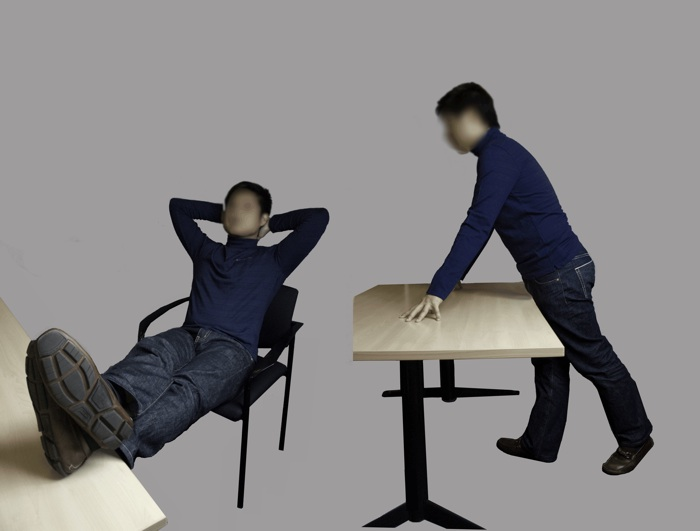
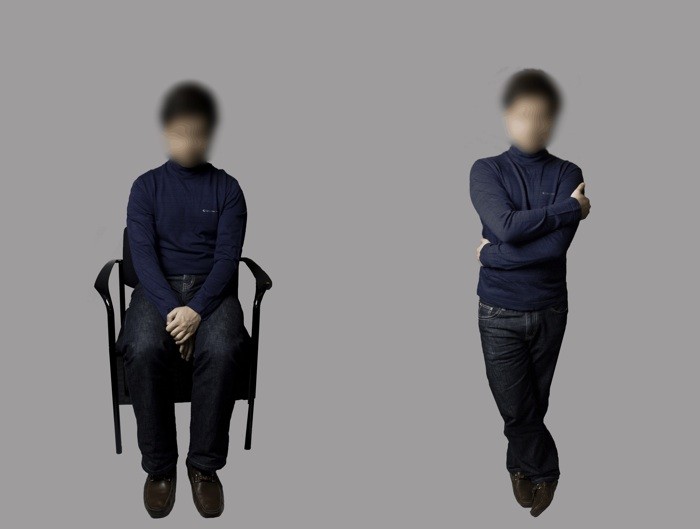
好了,既然權力可以展現自信,那麼高權力的人,會有什麼樣的特徵呢?先就高權力者的姿勢來看吧!不論是古時候的皇帝,或是現代電影中的老大(想想《動物方城市》當中的 B 老大、《與森林共舞》當中的紅毛猩猩領袖),總是會霸氣地坐在一張寬闊的椅子上吧!你應該很難想像,蜷縮在角落裡抱著膝蓋、低著頭的人是一個團體當中的領袖。沒錯,開闊的姿勢、寬廣的四肢、佔有較多空間的姿態,正是高權力的象徵;相反的,封閉的姿勢、蜷縮的軀幹則是低權力的象徵[9, 11-13]。
[1]Carney, D. R., Cuddy, A. J. C., Yap, A. J. (2010). Power posing brief nonverbal displays affect neuroendocrine levels and risk tolerance. Psychological Science, 21, 1363-1368.
[2]Keltner, D., Gruenfeld, D.H., & Anderson, C. (2003). Power, approach, and inhibition. Psychological Review, 110, 265–284.
[3]Anderson, C., Galinsky, A. D. (2006). Power, optimism, and risk taking. European Journal of Social Psychology, 36, 511-536.
[4]Burgmer, P., & Englich, B. (2012). Bullseye! How power improves motor performance. Social Psychological and Personality Science, 3, 1-9.
[5]Anderson, C., & Berdahl, J. L. (2002). The experience of power: Examining the effects of power on approach and inhibition tendencies. Journal of Personality and Social Psychology, 83, 1362–1377.
[6]Galinsky, A. D., Magee, J. C., Gruenfeld, D. H., Whitson, J. A., & Liljenquist, K. A. (2008). Power reduces the press of the situation: Implications for creativity, conformity, and dissonance. Journal of Personality and Social Psychology, 95, 1450-1066.
[7]Guinote, A. (2007). Power and goal pursuit. Personality and Social Psychology Bulletin, 33, 1076-1087.
[8]Smith, P. K., Jostmann, N. B., Galinsky, A. D., & van Dijk, W. W. (2008). Lacking power impairs executive functions. Psychological Science, 19, 441-447.
[9]de Waal, F. (1998). Chimpanzee politics: Power and sex among apes. Baltimore, MD: Johns Hopkins University Press
[10]Anderson, C., & Galinsky, A.D. (2006). Power, optimism, and the proclivity for risk. European Journal of Social Psychology, 36, 511–536.
[11]Carney, D.R., Hall, J.A., & Smith LeBeau, L. (2005). Beliefs about the nonverbal expression of social power. Journal of Nonverbal Behavior, 29, 105–123.
[12]Darwin, C. (2009). The expression of the emotions in man and animals. New York, NY: Oxford. (Original work published 1872)
[13]Hall, J.A., Coats, E.J., & Smith LeBeau, L. (2005). Nonverbal behavior and the vertical dimension of social relations: A meta-analysis. Psychological Bulletin, 131, 898–924.
[14]Archer, J. (2006). Testosterone and human aggression: An evaluation of the challenge hypothesis. Neuroscience & Biobehavioral Reviews, 30, 319–345.
[15]Mazur, A., & Booth, A. (1998). Testosterone and dominance in men.Behavioral & Brain Sciences, 21, 353–397.
[16]Booth, A., Shelley, G., Mazur, A., Tharp, G., & Kittok, R. (1989). Testosterone and winning and losing in human competition. Hormones and Behavior, 23, 556–571.
[17]Abbott, D.H., Keverne, E.B., Bercovitch, F.B., Shively, C.A., Mendoza, S.P., Saltzman, W., et al. (2003). Are subordinates always stressed? A comparative analysis of rank differences in cortisol levels among primates. Hormones and Behavior, 43, 67–82.
[18]Coe, C.L., Mendoza, S.P., & Levine, S. (1979). Social status constrains the stress response in the squirrel monkey. Physiology & Behavior, 23, 633–638.
[19]Sapolsky, R.M., Alberts, S.C., & Altmann, J. (1997). Hypercortisolism associated with social subordinance or social isolation among wild baboons. Archives of General Psychiatry, 54, 1137–1143.
[20]Segerstrom, S., & Miller, G. (2004). Psychological stress and the human immune system: A meta-analytic study of 30 years of inquiry. Psychological Bulletin, 130, 601–630.
[21]Kuhlmann, S., Piel, M., Wolf, O.T. (2005). Impaired Memory Retrieval after Psychosocial Stress in Healthy Young Men. Journal of Neuroscience, 25(11), 2977-2982.
[22]Cohen, S., Schwartz, J.E., Epel, E., Kirschbaum, C., Sidney, S., & Seeman, T. (2006). Socioeconomic status, race, and diurnal cortisol decline in the Coronary Artery Risk Development in Young Adults (CARDIA) study. Psychosomatic Medicine, 68, 41–50.
[23]Sapolsky, R.M. (2005). The influence of social hierarchy on primate health. Science, 308, 648–652.
[24]Mehta, P.H., & Josephs, R.A. (2010). Dual-hormone regulation of dominance. Manuscript in preparation.
[25]Strack, F., Martin, L.L., & Stepper, S. (1988). Inhibiting and facilitating conditions of the human smile: A nonobtrusive test of the facial feedback hypothesis. Journal of Personality and Social Psychology, 54, 768–777.
[26]Stepper, S., & Strack, F. (1993). Proprioceptive determinants of emotional and nonemotional feelings. Journal of Personality and Social Psychology, 64, 211–220.
[27]Riskind, J.H., & Gotay, C.C. (1982). Physical posture: Could it have regulatory or feedback effects on motivation and emotion? Motivation and Emotion, 6, 273–298.
[28]Briñol, P., & Petty, R.E. (2003). Overt head movements and persuasion: A self-validation analysis. Journal of Personality and Social Psychology, 84, 1123–1139.
[29]Cuddy, Amy J.C., Caroline A. Wilmuth, and Dana R. Carney. “The Benefit of Power Posing Before a High-Stakes Social Evaluation.”Harvard Business School Working Paper, No. 13-027, September 2012.
[30]Smith, P. K., Jostmann, N. B., Galinsky, A. D., & van Dijk, W. W. (2008). Lacking power impairs executive functions. Psychological Science, 19, 441-447.
View Comments