window.googletag = window.googletag || {cmd: []};
googletag.cmd.push(function() {
//googletag.defineSlot('/21697024903,166958332/2021_pansci_all_inread_p4', [[300, 250], [336, 280]], 'div-gpt-ad-1636362736559-0').addService(googletag.pubads()).setTargeting('zi-path', location.pathname)
googletag.defineSlot('/21697024903,166958332/2021_pansci_all_inread_p8', [[300, 250], [728, 90], [336, 280], [1, 1]], 'div-gpt-ad-1635416170062-0').addService(googletag.pubads()).setTargeting('zi-path', location.pathname);
googletag.defineSlot('/21697024903,166958332/2021_pansci_all_inread_p12', [[336, 280], [650, 360], [1, 1], [300, 250], [728, 90], [650, 250], 'fluid', [320, 480]], 'div-gpt-ad-1628844784671-0').addService(googletag.pubads()).setTargeting('zi-path', location.pathname);
googletag.pubads().enableLazyLoad({ fetchMarginPercent: 80, renderMarginPercent: 80, mobileScaling: 1.0 });googletag.pubads().enableSingleRequest();
googletag.pubads().collapseEmptyDivs();
googletag.enableServices();
});
window.AviviD = window.AviviD || {settings:{},status:{}}; AviviD.web_id = "pansci"; AviviD.category_id = "20210809000002"; AviviD.tracking_platform = 'likr'; (function(w,d,s,l,i){w[l]=w[l]||[];w[l].push({'gtm.start': new Date().getTime(),event:'gtm.js'});var f=d.getElementsByTagName(s)[0], j=d.createElement(s),dl=l!='dataLayer'?'&l='+l:'';j.async=true;j.src= 'https://www.googletagmanager.com/gtm.js?id='+i+dl+'×tamp='+new Date().getTime();f.parentNode.insertBefore(j,f); })(window,document,'script','dataLayer','GTM-W9F4QDN'); (function(w,d,s,l,i){w[l]=w[l]||[];w[l].push({'gtm.start': new Date().getTime(),event:'gtm.js'});var f=d.getElementsByTagName(s)[0], j=d.createElement(s),dl=l!='dataLayer'?'&l='+l:'';j.async=true;j.src= 'https://www.googletagmanager.com/gtm.js?id='+i+dl+'×tamp='+new Date().getTime();f.parentNode.insertBefore(j,f); })(window,document,'script','dataLayer','GTM-MKB8VFG');
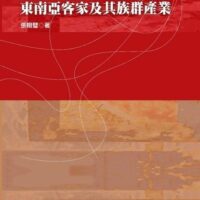
東南亞客家及其族群產業

客家移民落腳在不同社會,會受到不同歷史文化脈絡、政治經濟發展與族群互動關係的影響,形成或是建構出不同的客家文化特質。因此,不同區域間的比較研究對釐清「客家」或是「客家文化」的概念,以及對客家族群的相關研究具有相當重要的意義。
本書希望將新馬地區的客家產業發展置於上述的架構中,分析在地複雜性(local complexity)——包括移民的過程、人群的流動和現今居民社群的特性,以勾勒出「東南亞客家」的組織特性與文化內涵。讓「時間」(世界經濟、政權的轉變)與「空間內部的行動者」(族群關係)在區域中對話,並觀察與分析所產生的「客家」文化特質。
作者簡介
張翰璧
-----廣告,請繼續往下閱讀-----
<!--
googletag.cmd.push(function() { googletag.display('div-gpt-ad-1636362736559-0'); });
-->
於1996年取得德國Bielefeld大學社會學博士學位,曾在中央研究院歐美研究所和東南亞區域研究計畫(現在稱為亞太區域專題研究中心)擔任博士後研究(1997-2000),2000-2001年在荷蘭Leiden大學和德國Bielefeld大學做訪問學者,並於2001年至義守大學公共政策與管理系和管理研究所任教。2002至2003年任教於淡江大學未來學研究所,2003年8月開始任教於中央大學客家社會文化研究所(2013年改為客家語文暨社會科學學系)。開授的課程包括東南亞客家、多元文化主義專題、客家婦女專題、族群與經濟專題、客家族群文化實作、客家族群與社會記憶、質化研究方法等。研究的興趣包含東南亞研究、新移民與多元文化、族群經濟等議題。
window.googletag = window.googletag || {cmd: []};
googletag.cmd.push(function() {
googletag.defineSlot('/21697024903,166958332/2021_Pansci_All_inread_bottom', [[336, 280], [510, 352], [300, 250], [1, 1]], 'div-gpt-ad-1640585639386-0').setTargeting('zi-path', location.pathname).addService(googletag.pubads());
googletag.pubads().enableSingleRequest();
googletag.enableServices();
});
-----廣告,請繼續往下閱讀-----
googletag.cmd.push(function() { googletag.display('div-gpt-ad-1640585639386-0'); });
if(/Android|webOS|iPhone|iPad|iPod|BlackBerry|IEMobile|Opera Mini/i.test(navigator.userAgent)){
// 如果裝置為行動裝置
} else {
document.write('
');
var _lgy_lw = document.createElement("script");
_lgy_lw.type = "text/javascript";
_lgy_lw.charset = "UTF-8";
_lgy_lw.async = true;
_lgy_lw.src= "https://nt.compass-fit.jp/lift_widget.js?adspot_id=4321844";
var _lgy_lw_0 = document.getElementsByTagName("script")[0];
_lgy_lw_0.parentNode.insertBefore(_lgy_lw, _lgy_lw_0);
}